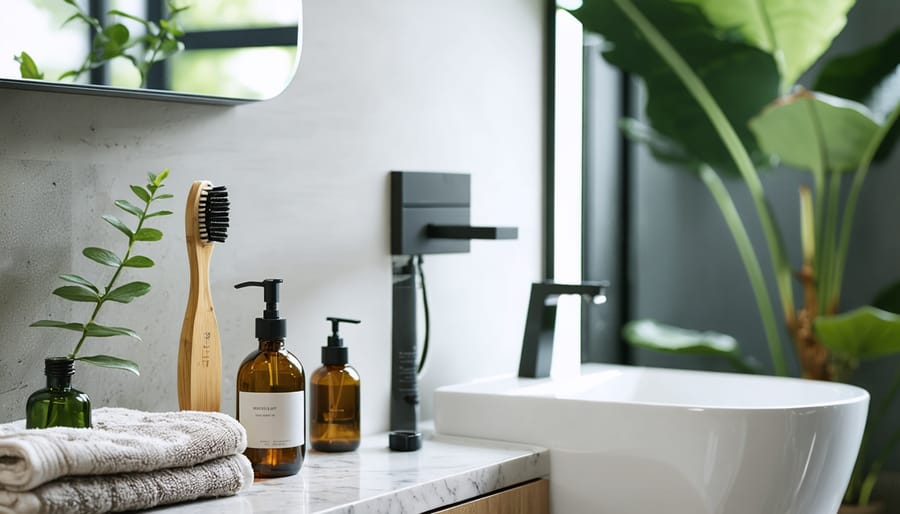
Transform your bathroom into an eco-friendly sanctuary while reducing your environmental footprint and monthly utility bills. Sustainable bathroom products have evolved far beyond basic water-saving fixtures, now offering stylish, practical solutions that make a real impact on both the planet and your wallet.
Every day, the average bathroom generates nearly 250 pounds of waste annually through disposable products and excessive water usage. By switching to sustainable alternatives – from bamboo toothbrushes to water-efficient showerheads – you can slash this environmental impact by up to 70% while creating a more mindful, modern space.
The good news? Making these changes doesn’t require a complete bathroom overhaul or a massive budget. Whether you’re a homeowner looking to reduce your carbon footprint or a renter seeking easy eco-friendly swaps, sustainable bathroom products offer accessible solutions for every lifestyle and budget. Let’s explore how small changes in your daily routine can create lasting positive impacts for both your home and the environment.
This guide cuts through the greenwashing to bring you practical, proven solutions that actually work – helping you create a more sustainable bathroom without compromising on comfort or style.
Water-Efficient Fixtures That Make a Difference
Low-Flow Showerheads and Faucets
Modern low-flow showerheads and faucets have come a long way from their water-restricting predecessors. Today’s fixtures are engineered to save water and money without compromising on your shower experience or hand-washing comfort.
These innovative fixtures typically use aerators or precision-engineered spray patterns to maintain strong water pressure while using significantly less water. A standard showerhead uses about 2.5 gallons per minute (GPM), while modern low-flow options use just 1.5 GPM or less – that’s a 40% reduction in water usage!
When shopping for low-flow fixtures, look for the WaterSense label, which guarantees both water efficiency and performance. Many models offer adjustable settings, allowing you to switch between different spray patterns based on your needs. Popular features include:
• Pressure-compensating technology that maintains consistent flow regardless of water pressure
• Air-injection systems that create larger water droplets for better coverage
• Pause buttons for additional water savings while lathering
• Self-cleaning nozzles to prevent mineral buildup
Installation is typically straightforward – most models can be attached to existing plumbing with basic tools. For faucets, simply unscrew your current aerator and replace it with a low-flow version. Showerheads usually require nothing more than a wrench and some plumber’s tape to install.
The best part? These fixtures often pay for themselves within months through reduced water and heating bills, making them a smart investment for both your wallet and the planet.
Dual-Flush Toilets and Water-Saving Technologies
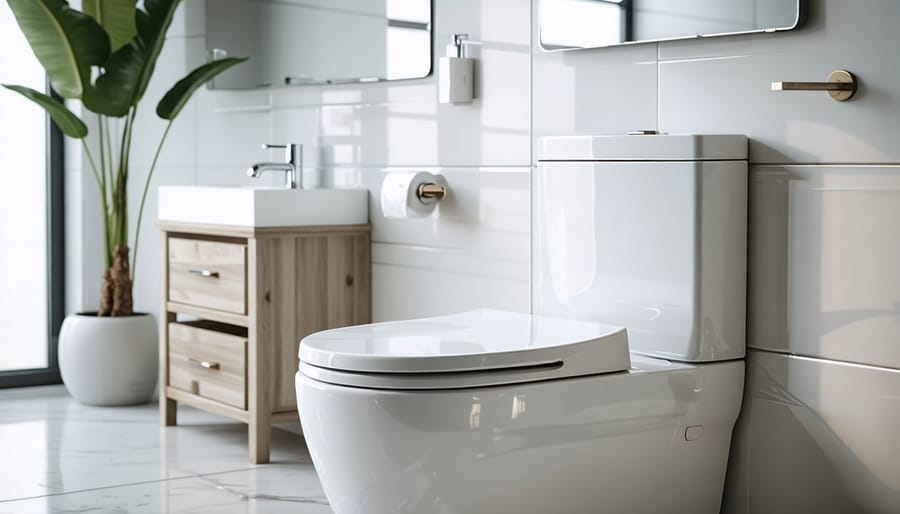
Dual-flush toilets represent one of the most significant advancements in bathroom water conservation. These innovative fixtures offer two distinct flush options: a light flush for liquid waste (typically using 0.8 to 1.1 gallons) and a full flush for solid waste (around 1.6 gallons). Compared to traditional toilets that use up to 3.5 gallons per flush, the water savings are substantial – potentially reducing your water usage by 50% or more.
But the innovation doesn’t stop there. Modern toilets now come equipped with pressure-assisted flushing systems that use compressed air to enhance flushing power while using less water. Some models even feature vacuum-assist technology, which creates a powerful siphon effect for effective waste removal with minimal water usage.
For those looking to upgrade their existing toilets, several retrofit options are available. Dual-flush conversion kits can transform your standard toilet into a water-saving fixture for a fraction of the cost of a new toilet. These kits are generally easy to install and can pay for themselves through water savings within months.
Smart toilets take water conservation even further by incorporating sensors that adjust flush volume based on actual usage. While these models tend to be pricier, they offer additional features like automatic flushing, self-cleaning capabilities, and usage tracking to help you monitor your water consumption.
When shopping for water-saving toilets, look for WaterSense certification – this EPA-backed label guarantees that the toilet meets strict water efficiency standards while maintaining performance.
Eco-Friendly Materials and Finishes
Recycled and Renewable Materials
The bathroom is a perfect place to start incorporating sustainable materials for your home, and today’s market offers numerous eco-friendly options that don’t compromise on style or functionality. Bamboo has emerged as a star player in sustainable bathroom products, featuring in everything from toilet paper holders to bath mats. This fast-growing grass requires minimal water and pesticides to thrive, making it an excellent renewable resource.
Recycled materials are making waves in bathroom design, with post-consumer plastic finding new life in shower curtains, toothbrush holders, and storage containers. Look for products made from recycled glass, which adds a touch of elegance while keeping materials out of landfills. Many companies now offer bathroom accessories crafted from reclaimed wood, giving old timber a second chance while adding warmth and character to your space.
Cork is another sustainable superstar worth considering. Naturally water-resistant and antimicrobial, it’s perfect for bath mats and wall tiles. Plus, harvesting cork doesn’t harm the tree, allowing it to continue producing this versatile material for decades.
When shopping for bathroom textiles like towels and washcloths, opt for organic cotton or hemp products. These materials are grown with fewer pesticides and require less water than conventional cotton. Some innovative brands are even creating towels from recycled water bottles, proving that sustainability can be both practical and comfortable.
Remember to look for products with minimal packaging or those packaged in recyclable materials to further reduce your environmental impact.
Non-Toxic Finishes and Coatings
When it comes to creating a truly sustainable bathroom, the finishes and coatings you choose matter just as much as your fixtures and materials. Traditional finishes often contain volatile organic compounds (VOCs) and harsh chemicals that can harm both your health and the environment. Fortunately, there are numerous eco-friendly alternatives available today.
Natural oils and waxes are excellent choices for protecting wooden surfaces in your bathroom. These finishes, such as linseed oil, tung oil, and beeswax, not only provide beautiful results but also allow the wood to breathe while remaining water-resistant. They’re completely biodegradable and safe to apply, making them perfect for DIY projects.
Water-based polyurethanes have come a long way in recent years. They offer excellent durability and water resistance while containing significantly fewer VOCs than their traditional counterparts. These finishes are particularly good for high-moisture areas and can be applied to various surfaces, from wood to concrete.
Zero-VOC paints and sealants are another fantastic option for bathroom walls and surfaces. These products perform just as well as conventional versions but without the harmful emissions. Many brands now offer mold and mildew-resistant formulations specifically designed for bathroom use.
For metal fixtures and accessories, look for powder-coated finishes. This process is more environmentally friendly than traditional liquid coatings and creates a durable, long-lasting finish that resists chipping and scratching. Plus, powder coating produces minimal waste and doesn’t release harmful solvents into the air.
Remember to check for third-party certifications like GREENGUARD or Green Seal when selecting your finishes. These certifications ensure the products meet strict environmental and health standards.
Energy-Efficient Bathroom Solutions
LED Lighting Systems
Transforming your bathroom lighting with energy-efficient LED lighting is one of the smartest sustainable upgrades you can make. These modern lighting solutions consume up to 90% less energy than traditional incandescent bulbs while lasting up to 25 times longer.
For your bathroom, consider installing LED strip lights around your mirror for perfect makeup application and grooming. These strips provide even, shadow-free illumination and can be dimmed to create a relaxing ambiance for evening baths. Overhead LED fixtures with moisture-resistant ratings are perfect for shower areas and general lighting.
Many LED systems now come with smart features like motion sensors, which automatically turn lights off when the bathroom is empty, and color temperature adjustments that match your natural circadian rhythm. Cool white light in the morning helps energize you, while warm tones in the evening promote relaxation.
Installation is typically straightforward – many LED fixtures are direct replacements for existing lights. Look for options with the ENERGY STAR certification to ensure the highest efficiency standards. While LED lights may cost more upfront, they usually pay for themselves within two years through reduced energy bills and replacement costs.
Pro tip: Choose LED lights with a Color Rendering Index (CRI) of 90 or higher for the most natural-looking illumination, especially important for applying makeup or grooming.

Smart Ventilation Systems
Modern bathroom ventilation has come a long way from simple exhaust fans. Today’s smart ventilation systems combine energy efficiency with powerful performance to create a healthier, more sustainable bathroom environment. These innovative systems use humidity sensors to automatically activate when moisture levels rise, ensuring optimal air quality without unnecessary energy consumption.
One of the most impressive features of smart ventilation is the heat recovery capability. These systems capture the warmth from outgoing air and use it to pre-heat incoming fresh air, reducing heating costs during colder months. Some models can recover up to 90% of heat that would otherwise be lost through traditional ventilation.
Motion sensors and timer functions add another layer of efficiency, automatically adjusting operation based on bathroom usage patterns. Many systems also come with smartphone connectivity, allowing you to monitor air quality and adjust settings remotely. This smart technology ensures your bathroom is properly ventilated only when needed, significantly reducing energy waste.
For optimal performance, look for units with Energy Star certification and multiple speed settings. Some advanced models even include built-in LED indicators that alert you when it’s time to clean or replace filters, helping maintain peak efficiency.
Installing a smart ventilation system might cost more upfront than a traditional fan, but the long-term savings on energy bills and improved air quality make it a worthwhile investment for any sustainable bathroom upgrade.
Sustainable Storage and Accessories
Bamboo and Sustainable Wood Products
When it comes to sustainable bathroom storage solutions, bamboo sustainable products are leading the way. This versatile material isn’t just beautiful – it’s also one of the fastest-growing plants on Earth, making it an incredibly renewable resource. Bamboo bathroom organizers, shelving units, and storage boxes offer a perfect blend of style and eco-consciousness while being naturally water-resistant.
Beyond bamboo, sustainably harvested wood products certified by the Forest Stewardship Council (FSC) provide excellent alternatives for bathroom storage. These include teak, acacia, and cedar options that naturally resist moisture and mold. Look for pieces finished with non-toxic sealants to ensure they maintain their durability in humid bathroom environments.
To maximize the life of your wooden bathroom storage, consider wall-mounted solutions that keep items off potentially wet surfaces. Simple additions like bamboo toothbrush holders, soap dishes, and over-the-toilet storage units can transform your bathroom while minimizing environmental impact.
When shopping for wooden bathroom products, always check for certification labels and opt for pieces made from single materials rather than composites. This ensures easier recycling when the product eventually reaches the end of its life cycle.
Plastic-Free Alternatives
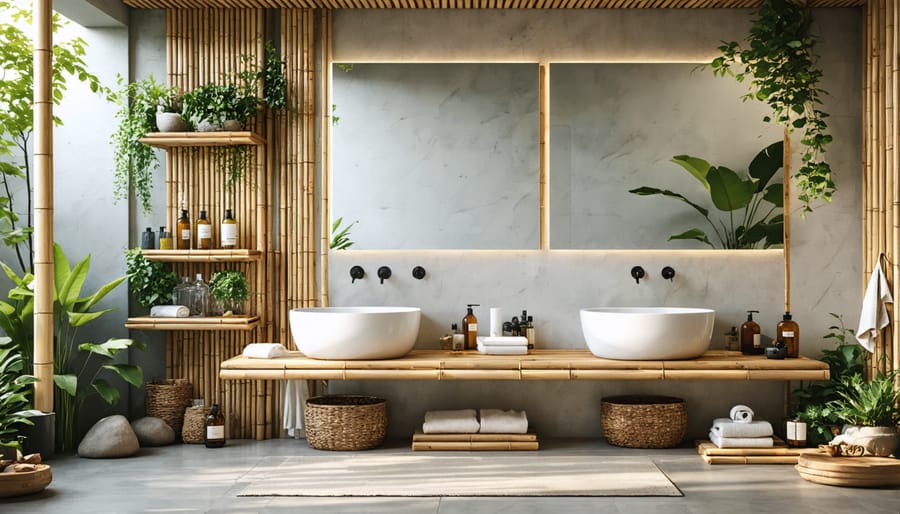
Making the switch from plastic bathroom items is easier than you might think, and there are plenty of stylish alternatives that can enhance your bathroom’s aesthetic while reducing environmental impact. Bamboo is a fantastic material for toothbrushes, shower caddies, and soap dishes, offering natural water resistance and antimicrobial properties. Consider switching to glass dispensers for your shampoo and soap – they’re not only more elegant but can be refilled indefinitely.
For storage solutions, opt for woven baskets made from natural fibers or sleek stainless steel containers that will last for years. Replace plastic shower curtains with organic cotton or hemp alternatives, which are both naturally mold-resistant and machine washable. Metal razors with replaceable blades offer a premium shaving experience while eliminating disposable plastic razors from your routine.
Look for dental care alternatives too – wooden tongue scrapers, silk dental floss in glass containers, and toothpaste tablets in reusable tins are becoming increasingly popular. For cotton swabs and makeup removal, choose biodegradable options made from bamboo and organic cotton. Even simple switches like replacing plastic bin liners with newspaper or going liner-free can make a significant difference in reducing your bathroom’s plastic footprint.
Making the switch to sustainable bathroom products is more than just a trend – it’s a meaningful step toward creating a better future for our planet while enhancing our daily lives. By incorporating eco-friendly alternatives like bamboo toothbrushes, refillable dispensers, and water-saving fixtures, we can significantly reduce our environmental footprint without sacrificing comfort or convenience.
The benefits are clear: reduced plastic waste, lower water consumption, fewer harmful chemicals in our waterways, and often substantial cost savings over time. Many sustainable bathroom products actually outperform their traditional counterparts while lasting longer, making them a smart investment for both your home and the environment.
Remember, transitioning to a more sustainable bathroom doesn’t have to happen overnight. Start with simple swaps that feel manageable, like switching to plastic-free toiletries or installing a low-flow showerhead. As you become more comfortable with these changes, you can gradually incorporate additional eco-friendly products and practices.
Every small change matters. Whether you’re motivated by environmental concerns, cost savings, or simply the desire for a healthier home, sustainable bathroom products offer a practical way to make a positive impact. By making mindful choices in our daily routines, we contribute to a more sustainable future while creating a cleaner, healthier space for ourselves and our families.
Take that first step today – your planet (and your wallet) will thank you.