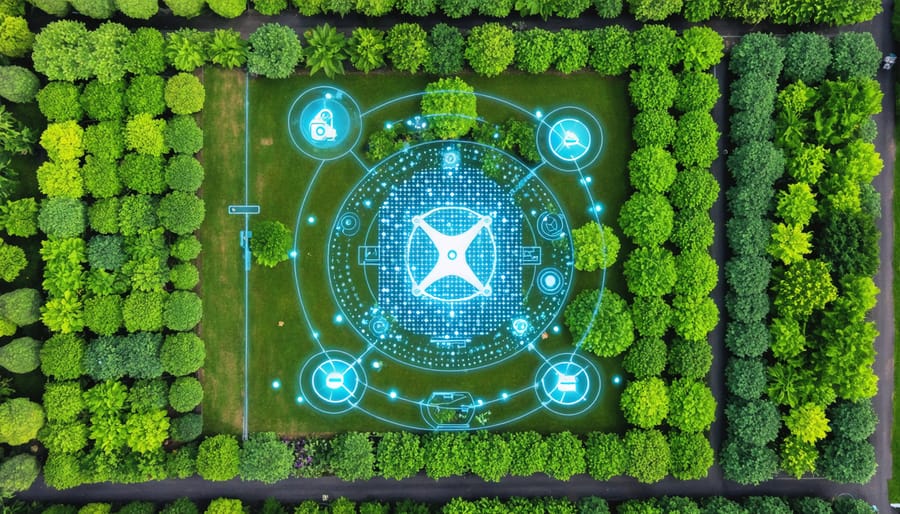
Transform your garden maintenance with drone technology that puts professional-level crop monitoring right at your fingertips. Imagine spotting pest invasions, water stress, and nutrient deficiencies before they become visible to the naked eye – all from your smartphone or tablet. Today’s affordable consumer drones, equipped with specialized cameras and sensors, give home gardeners unprecedented insight into their plants’ health through thermal imaging, multispectral analysis, and real-time growth tracking.
Modern drone monitoring systems help you optimize watering schedules, reduce fertilizer waste, and catch problems early, turning data into practical actions that save time and improve yields. Whether you’re tending a small vegetable patch or managing a larger homestead, these eye-in-the-sky solutions provide precise, actionable information that traditional ground-based monitoring simply can’t match.
Best of all, getting started with drone crop monitoring doesn’t require extensive technical knowledge. With user-friendly apps and automated flight patterns, even drone beginners can capture valuable garden insights within their first flight. This revolutionary technology puts commercial-grade agricultural tools into the hands of home gardeners, helping you grow smarter, not harder.
How Drones Transform Home Garden Care
Bird’s Eye Benefits
Looking down at your garden from above reveals a whole new perspective on plant health that you just can’t get from ground level. Drone monitoring transforms how we spot potential issues, making it easier to catch problems before they become serious headaches.
With aerial views, you can quickly identify areas where plants are struggling, spot irregular growth patterns, and even detect early signs of pest infestations or disease outbreaks. The beauty of drone monitoring lies in its efficiency – you can survey your entire garden in minutes instead of hours of walking between rows.
Color variations that might be subtle at eye level become strikingly apparent from above, helping you identify nutrient deficiencies or water stress before visible damage occurs. This bird’s-eye view also helps you optimize your irrigation patterns by revealing areas that might be getting too much or too little water.
Perhaps most importantly, drone monitoring helps you make data-driven decisions about your garden care. By regularly capturing aerial images, you can track changes over time and adjust your gardening strategy accordingly, leading to healthier plants and better yields.
Smart Garden Analysis
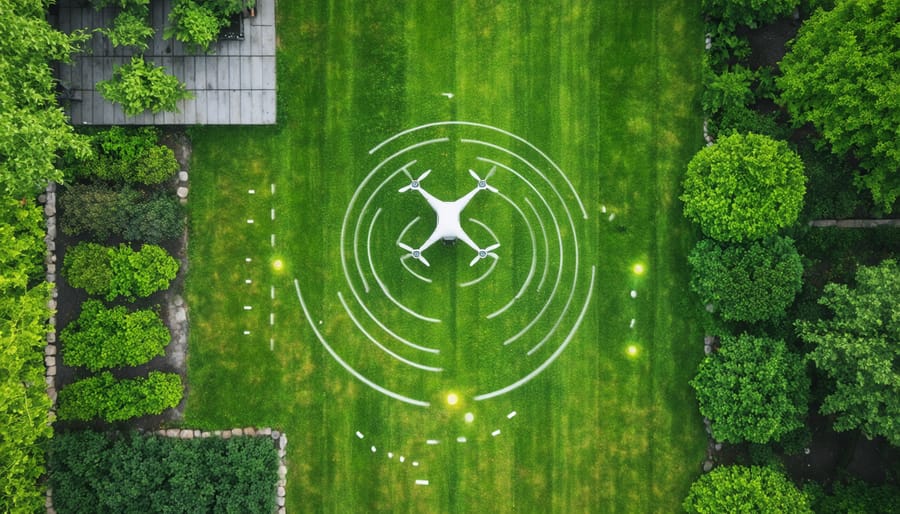
Drones equipped with advanced sensors and cameras have revolutionized the way we approach precision garden monitoring, making it easier than ever to keep tabs on your plants’ health. These smart flying assistants use specialized cameras that can detect issues invisible to the naked eye, including early signs of pest infestation, nutrient deficiencies, and water stress.
The magic happens through multispectral imaging, which captures both visible and infrared light reflected from your plants. This technology helps you spot struggling areas before visible symptoms appear, letting you address problems early. Thermal sensors can identify irrigation issues by detecting temperature variations across your garden, while RGB cameras provide detailed visual data for tracking growth patterns and overall plant development.
What makes this technology particularly useful for home gardeners is its ability to create detailed maps of your garden’s health zones. These maps highlight areas that need attention, helping you make informed decisions about watering, fertilizing, or pest control. By combining real-time data with automated analysis, you can maintain your garden more efficiently and effectively than ever before.
Setting Up Your Garden Drone System
Choosing the Right Drone
When selecting a drone for garden monitoring, you’ll want to focus on a few key features that make the task easier and more effective. For beginners, consider starting with a lightweight drone that offers stable flight characteristics and good battery life – typically around 20-30 minutes of flight time should be sufficient for most home gardens.
Look for drones equipped with high-quality cameras that offer at least 1080p resolution. While 4K cameras are available, they’re not always necessary for basic crop monitoring. The camera should have decent low-light performance and adjustable angles to capture different perspectives of your plants.
Flight features like hover stability and return-to-home functionality are essential for smooth operation. Many modern drones include automated flight patterns, which can be incredibly helpful for consistent monitoring of your garden rows. Some models even offer specialized agriculture modes that help identify plant health issues.
Battery life is crucial, but don’t forget about the drone’s weather resistance. Choose a model that can handle light wind and occasional moisture, as you’ll likely need to fly in various weather conditions. While professional agricultural drones can cost thousands, you can find suitable options for home gardens in the $300-800 range.
Consider the drone’s size in relation to your garden – compact models are often sufficient for smaller spaces and easier to maneuver between plants. Just ensure the drone you choose meets local regulations for recreational flight.
Essential Features and Attachments
To effectively monitor your garden with a drone, you’ll need a few essential components. Start with a quality camera drone equipped with both RGB and infrared sensors – these are perfect for capturing detailed images of your plants’ health. The drone should have a decent flight time of at least 20 minutes and stable hovering capabilities for clear shots.
A thermal imaging camera is incredibly helpful for detecting water stress and irrigation issues, while multispectral sensors can provide detailed information about plant health and chlorophyll content. When combined with AI-powered garden analysis, these sensors can help you spot problems before they become visible to the naked eye.
Don’t forget practical attachments like UV filters for your camera lens and extra batteries for longer monitoring sessions. A reliable GPS module ensures precise flight paths and consistent monitoring spots. For best results, include a lightweight spray attachment for targeted treatment of problem areas – this turns your monitoring drone into a practical garden management tool.
Flight Planning Basics
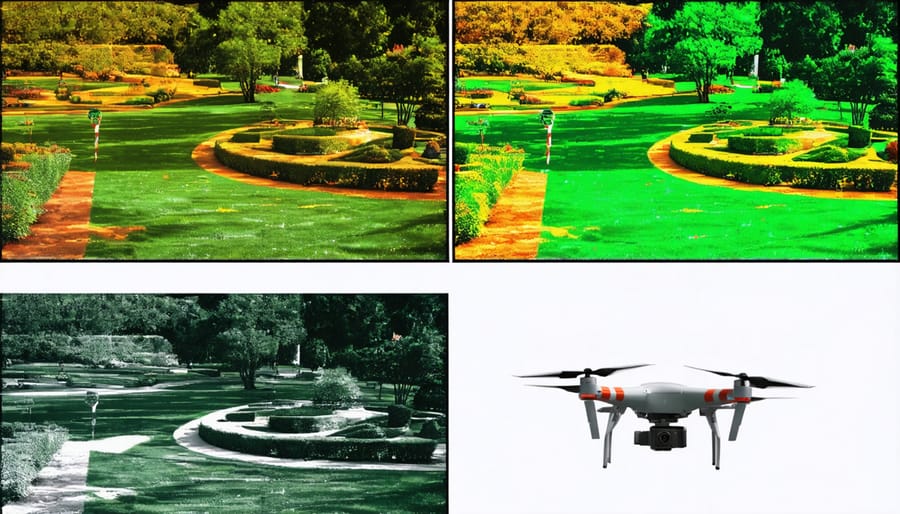
Planning your drone flight path is simpler than you might think! Start by walking your garden to identify key areas that need monitoring and potential obstacles like trees or structures. Using your drone’s companion app, create a basic grid pattern that covers your growing areas systematically. Most modern agricultural drones allow you to set waypoints – specific spots where your drone will pause to take detailed images.
For smaller gardens, aim to fly at about 30-50 feet altitude for the best balance of coverage and detail. Set your drone to capture images with at least 60% overlap between shots to ensure complete coverage. Remember to schedule your flights during optimal conditions – early morning or late afternoon when lighting is even and winds are typically calmer.
Consider creating multiple flight plans for different purposes: one for general monitoring, another for detailed inspection of problem areas, and a third for specific plant health checks. Save these routes in your app for easy reuse throughout the growing season. Start with simple patterns and gradually experiment with more complex routes as you become comfortable with the technology.
Monitoring Your Garden Like a Pro
Plant Health Assessment
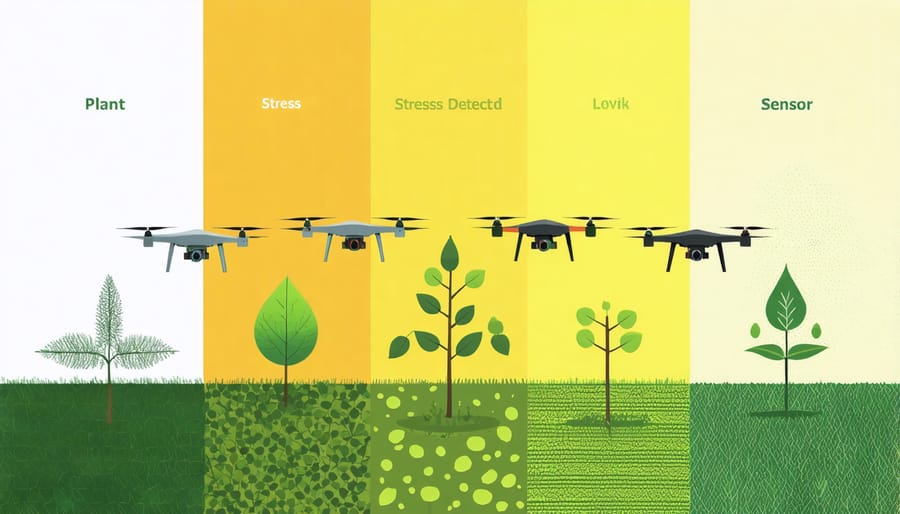
Drones equipped with specialized cameras and sensors can provide detailed insights into your garden’s health that might be impossible to spot from ground level. These aerial helpers use various imaging technologies to assess plant conditions, making it easier for you to catch problems early and maintain a thriving garden.
The most common method is through multispectral imaging, which captures both visible light and near-infrared radiation. This technology helps create what’s called the Normalized Difference Vegetation Index (NDVI), which shows how vigorously your plants are growing. Healthy plants appear bright green in these images, while stressed or unhealthy plants show up in different colors, helping you quickly identify trouble spots.
Temperature sensors on drones can detect subtle variations in plant temperature, which often indicate water stress before visible wilting occurs. Meanwhile, RGB (regular color) cameras can spot signs of pest damage, disease, or nutrient deficiencies through changes in leaf color and pattern.
To get the most accurate health assessment, fly your drone at consistent heights and times of day, preferably when there’s even lighting. Many drone apps can help you create regular flight paths, ensuring you’re comparing the same areas over time. Remember to keep detailed records of your findings – this information becomes invaluable for tracking your garden’s progress and planning future improvements.
Water Management
Drones equipped with specialized sensors are revolutionizing the way we manage water in our gardens and small-scale farming operations. These aerial helpers can detect moisture levels across your entire growing area, helping you achieve efficient smart irrigation management without the guesswork.
Using thermal imaging and multispectral cameras, drones can create detailed maps showing which areas of your garden need more or less water. The technology works by capturing variations in plant temperature and health – stressed plants that need water appear warmer in thermal images, while properly hydrated plants maintain cooler temperatures.
By flying your drone regularly over your garden, you can:
– Identify dry spots before plants show visible signs of stress
– Detect leaks in irrigation systems
– Monitor the effectiveness of your watering schedule
– Adjust water distribution based on real-time needs
This information helps you make informed decisions about when and where to water, potentially reducing your water usage by up to 30%. For home gardeners, this means healthier plants, lower water bills, and more sustainable gardening practices.
The best part? Most consumer drones can be equipped with basic thermal cameras, making this technology accessible for everyday garden enthusiasts. You can start with simple monitoring flights once a week and adjust your watering routine based on the insights gathered.
Pest and Disease Detection
Drones equipped with specialized cameras and sensors have revolutionized the way we detect and manage garden pests and diseases. These eye-in-the-sky helpers can spot potential problems before they become visible to the naked eye, giving you a crucial head start in protecting your garden.
Using thermal and multispectral imaging, drones can identify subtle changes in plant health that might indicate pest infestations or disease outbreaks. For example, areas of stressed vegetation often appear differently in infrared imagery, allowing you to pinpoint exactly where problems are developing. This early warning system is particularly valuable for larger garden spaces where manual inspection might miss emerging issues.
Modern automated pest detection systems can analyze drone footage to identify specific pest species and disease patterns, making it easier to choose the right treatment approach. The technology can detect common garden enemies like aphids, caterpillars, and fungal infections before they cause significant damage.
Regular drone monitoring creates a detailed health map of your garden, helping you track problem areas over time and adjust your care routine accordingly. This proactive approach not only saves time and effort but also reduces the need for broad-spectrum pesticides, promoting a more sustainable and environmentally friendly garden management strategy.
Safety and Legal Considerations
Flight Regulations
Before launching your drone for garden monitoring, it’s essential to understand and follow the legal requirements. In the United States, if your drone weighs between 0.55 and 55 pounds, you’ll need to register it with the FAA and mark it with your registration number. Keep your drone within your visual line of sight and fly only during daylight hours or civil twilight.
For residential areas, maintain a maximum altitude of 400 feet and avoid flying over groups of people. Your property should have enough open space to operate safely, away from obstacles like power lines and tall trees. Be mindful of your neighbors’ privacy and obtain necessary permissions if your flight path includes their airspace.
Weather conditions matter too – avoid flying in rain, snow, or strong winds. Check local regulations, as some municipalities have additional restrictions on drone operations. Remember to keep your registration current and stay updated on changing regulations.
Neighbor-Friendly Operation
Being a considerate drone operator starts with understanding your neighbors’ concerns. Always notify adjacent property owners before conducting drone flights over your garden, and share your monitoring schedule with them. Keep flights between 9 AM and 5 PM to minimize disturbance, and maintain a reasonable distance from neighboring properties.
Choose flight paths that respect privacy, avoiding direct overflies of neighboring yards or windows. Keep your drone at appropriate heights – typically 50-100 feet for residential areas – to balance effective monitoring with minimal noise impact. Consider using quieter drone models with noise-reducing propellers if operating in densely populated areas.
Remember to follow local drone regulations and obtain necessary permits. When neighbors express interest, take time to explain how your drone monitoring benefits the community through sustainable gardening practices. This open communication often turns initial concerns into supportive relationships and might even inspire others to adopt similar eco-friendly gardening techniques.
Embracing drone-assisted crop monitoring in your home garden can revolutionize the way you care for your plants and maximize your harvests. By implementing this technology, you’ll save countless hours of manual inspection while gaining invaluable insights about your garden’s health. The combination of real-time monitoring, early problem detection, and precise resource management makes this approach particularly effective for both novice and experienced gardeners.
The benefits are clear: reduced water usage, optimized fertilizer application, early pest detection, and better overall crop yields. Best of all, getting started doesn’t require extensive technical knowledge or a huge investment. With today’s user-friendly drone technology and smartphone integration, you can begin monitoring your garden more effectively within days of setup.
Consider taking the first step by starting small – perhaps monitoring a single section of your garden – and gradually expanding as you become more comfortable with the technology. Remember, the goal is to work smarter, not harder, in creating your perfect home garden. The future of home gardening is here, and it’s more accessible than ever before.