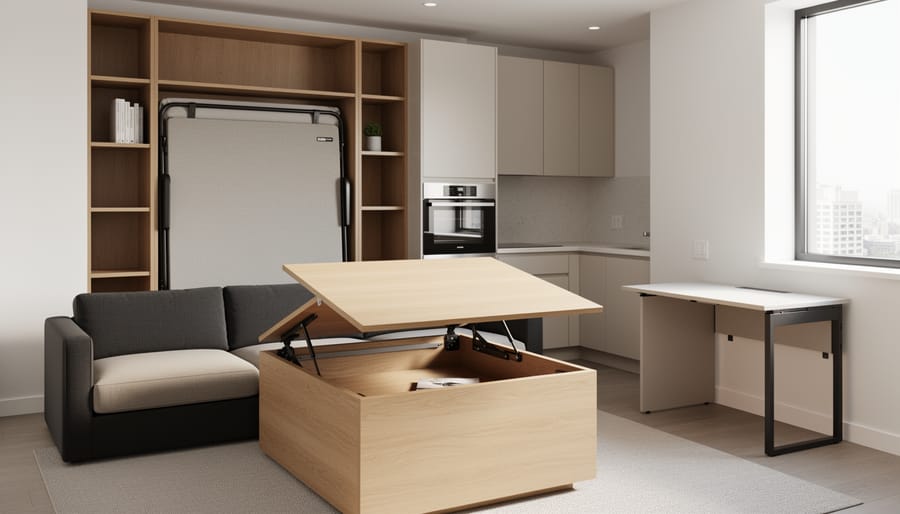
Living in a small apartment doesn’t mean sacrificing comfort or style—it means choosing furniture that works twice as hard. Space-saving transforming furniture revolutionizes how we use every square foot, turning single-purpose pieces into multi-functional powerhouses that adapt throughout your day.
Think of a coffee table that rises to dining height for dinner parties, then folds flat against the wall when guests leave. Picture a sleek console that extends into a desk for remote work, or a stylish ottoman that unfolds into a guest bed. These aren’t futuristic concepts—they’re practical solutions available right now that can double or triple your usable space without the cost of moving to a larger home.
The transforming furniture market has exploded beyond Murphy beds and futons. Today’s designs blend engineering ingenuity with contemporary aesthetics, offering pieces you’d proudly display even in a spacious home. Wall beds integrate seamlessly with shelving systems, modular sofas reconfigure for any room layout, and tables telescope to accommodate two people or ten.
Whether you’re furnishing a studio apartment, maximizing a tiny home, or simply want rooms that adapt to changing needs, transforming furniture delivers flexibility without compromise. The key lies in understanding which pieces solve your specific space challenges and how to select quality designs that withstand daily transformation. Smart furniture choices mean you’ll never again choose between having a home office and a dining room—you’ll simply have both, occupying the same footprint.
Why Transforming Furniture Changes Everything for Small Spaces
Living in a small apartment or compact home doesn’t mean you have to compromise on comfort or style. Transforming furniture changes the game entirely by solving one of the biggest challenges urban dwellers face: doing more with less square footage.
Think about your typical weeknight. You need a workspace for your laptop, a dining area for meals, and a comfortable spot to relax and watch TV. In a traditional setup, that’s three separate furniture pieces competing for precious floor space. But with transforming furniture, a single well-designed piece can handle all three roles seamlessly. That coffee table lifts to become a proper desk by day and a dining table by evening. Your living room suddenly works three times as hard without feeling cramped or cluttered.
The philosophy behind transforming furniture is beautifully simple: every square foot should earn its keep. These clever pieces recognize that modern life is fluid. We work from home, host friends for dinner, exercise in our living rooms, and need our spaces to adapt throughout the day. Rather than dedicating separate zones for activities you only do occasionally, transforming furniture lets you reclaim that space when you’re not using it.
Beyond the practical space savings, there’s an emotional benefit too. Small spaces can feel suffocating when they’re packed with single-purpose furniture. But when your environment can shift and breathe with your daily rhythms, it actually feels larger and more livable. You’re not constantly navigating around obstacles or sacrificing one activity for another.
These versatile solutions also complement other furniture hacks you might already use, creating a cohesive approach to small-space living. The result? A home that’s genuinely functional for how you actually live, not just how furniture showrooms think you should live. That’s the transformative power of furniture that adapts to you.
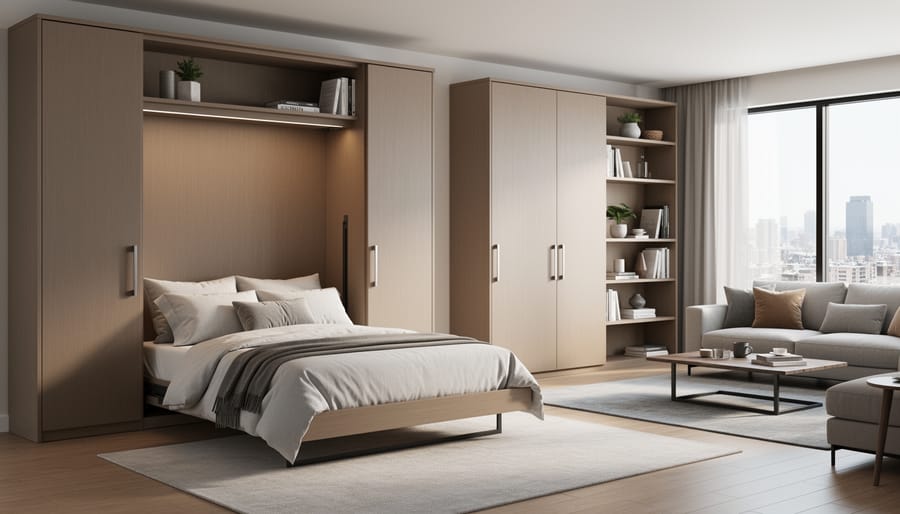
Murphy Beds and Wall Beds: Reclaim Your Floor Space
Modern Murphy Bed Styles Worth Considering
Today’s murphy beds have come a long way from the clunky designs you might remember. Let’s explore some configurations that actually make sense for modern living.
The desk murphy bed combo is perfect if you work from home. During the day, you have a full workspace with shelving and storage. At night, the desk folds up and reveals a comfortable queen or full-size bed. This works beautifully in studio apartments or spare rooms that need to pull double duty.
Sofa murphy beds offer the ultimate in flexibility. The bed frame includes an attached couch that automatically positions itself when you lower the bed. When folded up, you’ve got legitimate seating that doesn’t look like it’s hiding anything. These are ideal for living rooms or guest spaces where you want furniture that looks intentional.
Side-tilt murphy beds are gaining popularity in narrow rooms. Instead of pulling down from the wall, these rotate from a vertical position along the side. You’ll need less floor clearance, making them great for hallways or tight bedroom layouts.
For kids’ rooms, bunk murphy beds maximize vertical space while giving each child their own sleeping area. Some models even include built-in storage cubbies and reading lights.
What to Know Before Installation
Before you take the plunge, a little preparation goes a long way. Start by measuring your space carefully—and I mean twice, because there’s nothing worse than ordering that dream Murphy bed only to discover it’s two inches too wide. Take note of ceiling height, floor-to-ceiling measurements, and any obstacles like light switches or vents.
Wall requirements deserve special attention, especially for furniture that mounts or attaches. You’ll need to locate wall studs for secure installation, and drywall alone won’t cut it for heavy pieces like wall beds or fold-down tables. If you’re working with older plaster walls or unusual construction, consider consulting a professional to assess load-bearing capacity.
As for DIY versus professional installation, be honest about your skill level and available tools. Many transforming furniture pieces come with detailed instructions perfect for confident DIYers, but complex mechanisms or wall-mounted systems might warrant expert help. There’s no shame in calling a pro—it’s an investment in safety and peace of mind.
The good news? Most manufacturers offer excellent support resources, including video tutorials and customer service hotlines. You’ve got this, and the payoff of reclaiming your space will be absolutely worth the effort.
Convertible Tables: From Coffee to Dining in Seconds
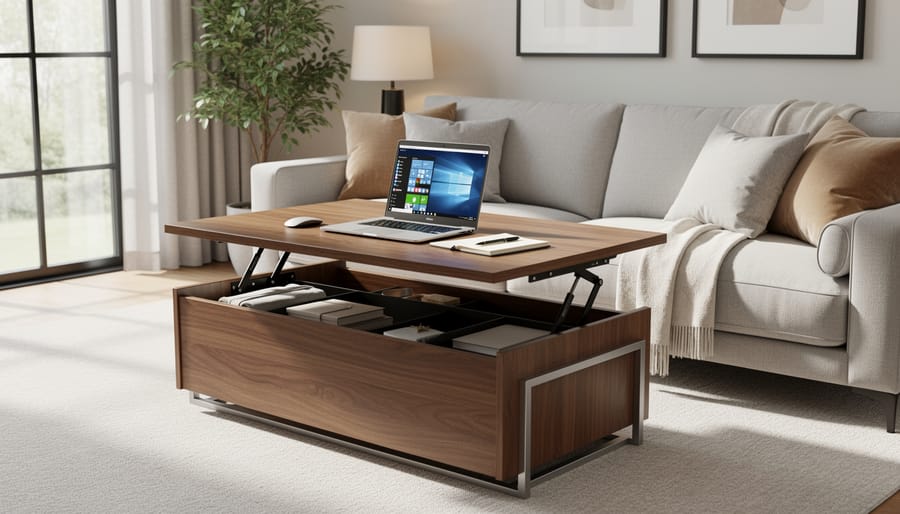
Lift-Top Coffee Tables for Work and Meals
Lift-top coffee tables are game-changers for small spaces, seamlessly transitioning from relaxed lounging height to comfortable work or dining level with a simple lift mechanism. The tabletop raises and extends forward, bringing your laptop, dinner plate, or crafting supplies within easy reach while you sit on the sofa. Many models also feature hidden storage compartments beneath the top, perfect for stashing remotes, magazines, or work supplies out of sight.
When shopping for a lift-top table, the mechanism quality matters tremendously. Look for gas lift springs or hydraulic hinges rather than manual lifts, which wear out quickly. Test the mechanism in-store if possible—it should lift smoothly without wobbling or sticking. A sturdy frame made from solid wood or reinforced engineered wood will last years longer than particle board alternatives.
Consider your primary use case when selecting size and features. If you work from home regularly, prioritize a larger lifting surface and ensure the height adjusts to ergonomic keyboard level. For dining purposes, check that the extended position reaches comfortably over your seating. Storage capacity varies widely between models, so measure what you need to store before committing. Quality lift-top tables typically range from 250 to 600 dollars, with the investment paying off in daily convenience and preserved floor space.
Expandable Dining Tables That Actually Fit
Expandable dining tables are game-changers when you’re juggling everyday meals and occasional dinner parties. The key is finding one that feels right-sized for daily use but doesn’t make you break a sweat when company arrives.
Start by measuring your space carefully. For everyday use, allow at least 36 inches of clearance around the table so people can move comfortably. When expanded, you might reduce this to 30 inches temporarily. Most expandable tables grow from seating four to six or eight people, adding 18 to 24 inches of length with drop leaves, butterfly leaves, or pull-apart mechanisms.
Drop-leaf tables work beautifully in tight spaces since the leaves fold completely down when not needed. Butterfly leaf tables store their extension piece right inside the table, so there’s no hunting through closets when guests arrive. For the smoothest experience, look for tables with easy-glide mechanisms that one person can operate without help.
Style-wise, round tables that expand to oval shapes are incredibly space-efficient for small rooms, while rectangular options suit longer, narrower spaces better. Choose lighter wood tones or glass tops to keep the room feeling open, and consider pedestal bases instead of four legs for easier chair placement and more legroom.
Sofa Beds and Sleeper Sofas That Don’t Scream ‘Guest Bed’
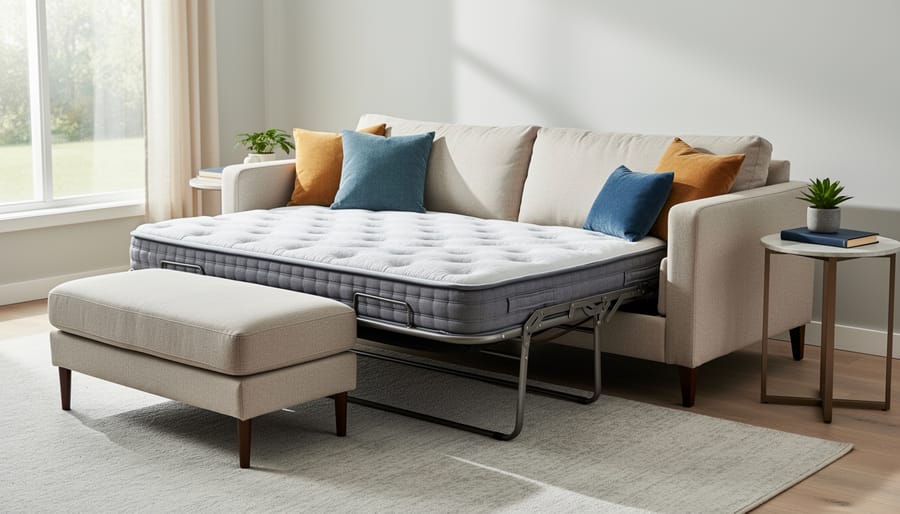
What Makes a Sleeper Sofa Actually Comfortable
Not all sleeper sofas are created equal, and the difference between a restful night and a backache comes down to a few key features. Start with the mattress—look for memory foam or innerspring options at least 4-5 inches thick. Thinner mattresses feel more like camping than sleeping, so don’t compromise here. The frame matters too. Hardwood frames outlast metal ones and provide better support for long-term use.
Before you buy, test the opening mechanism yourself. It should operate smoothly with one person and lock securely in place without wiggling. Check our guide to top-rated sleeper sofas for specific recommendations that pass these tests.
Here’s your in-store checklist: sit on the sofa in both positions, feel the mattress edge-to-edge for lumps or support bars, and ask about the warranty. Quality sleeper sofas typically come with 10-year frame warranties and replaceable mattresses. If the salesperson can’t demonstrate the mechanism easily, that’s your red flag to keep shopping.
Storage Ottomans and Benches: Hidden Space Heroes
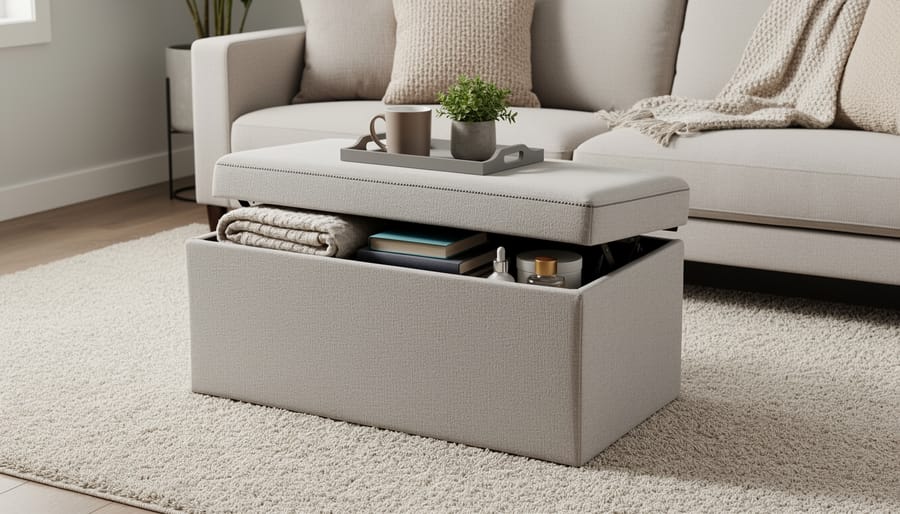
Don’t underestimate the power of a good ottoman or bench. These furniture pieces are the ultimate multitaskers, offering comfortable seating while secretly hiding everything from extra blankets to board games. They’re particularly brilliant for small spaces where every square inch counts.
Storage ottomans work beautifully at the foot of your bed, providing a spot to sit while putting on shoes and storing seasonal clothing inside. In the living room, they can serve as extra seating during gatherings, a footrest for movie nights, and a coffee table when topped with a decorative tray. The key is choosing the right size for your space. A large ottoman might overwhelm a tiny apartment, while several smaller cubes can be scattered around and regrouped as needed.
Benches shine in entryways and hallways. Look for designs with lift-top seats or pull-out drawers underneath. These spots are perfect for stashing shoes, pet supplies, or kids’ outdoor gear. Window seat benches transform awkward nooks into reading corners with built-in storage below.
Here’s a creative tip: use storage ottomans as nightstands in tight bedrooms. They provide the surface area you need while offering drawer-free storage that’s easier to access than traditional nightstand drawers.
When selecting, consider weight capacity if you’ll use it for seating frequently. Upholstered options add softness and style, while wooden or wicker benches bring texture and durability. Measure your available space carefully, leaving at least 18 inches of clearance for comfortable movement around the piece.
The beauty of storage benches and ottomans lies in their simplicity. They don’t require complicated mechanisms or assembly, yet they instantly double your room’s functionality without screaming “I’m trying to save space.”
Modular and Stackable Solutions for Flexible Living
When your living situation changes—whether you’re moving apartments, welcoming a new roommate, or shifting to remote work—your furniture should evolve with you. Modular and stackable solutions offer exactly this flexibility, making them perfect for renters who can’t commit to built-in storage or anyone whose space needs aren’t set in stone.
Cube storage systems are the backbone of adaptable organizing. These versatile units can be arranged horizontally as TV stands, stacked vertically as room dividers, or reconfigured into L-shapes as your layout changes. Add fabric bins for hidden storage or leave cubes open to display books and plants. The beauty is that you can start with just a few cubes and expand your system as your collection grows.
Stackable chairs solve the entertaining puzzle beautifully. When guests arrive, simply unstack what you need, then tuck them away afterward without sacrificing precious floor space. Look for designs that nest completely rather than just stacking straight up—they’ll take up even less room in your closet.
Modular shelving units adapt to different wall lengths and ceiling heights. Many systems use bracket-and-shelf configurations that let you adjust spacing between levels, accommodating everything from tall vases to short paperbacks. This adjustability means your investment moves with you from studio to two-bedroom without looking out of place.
If you’re crafty, DIY modular furniture projects let you customize pieces to your exact specifications and space constraints.
Expert tip: Choose modular pieces in neutral colors and simple designs. They’ll blend seamlessly as you rearrange them and won’t clash when you add new modules down the line. This smart approach keeps your space functional through every life chapter.
Smart Shopping: How to Choose Quality Transforming Furniture
Testing Mechanisms and Build Quality
Before you commit to any transforming furniture piece, it’s worth doing your homework to avoid costly disappointments. Here’s your practical checklist for evaluating quality:
Test the transformation mechanism multiple times in the store. It should move smoothly without sticking, grinding, or requiring excessive force. If it feels clunky now, it’ll only get worse with daily use.
Check all joints and connection points closely. Look for metal reinforcements at stress points rather than plastic components, which can crack over time. Give the piece a gentle shake—any wobbling indicates poor construction.
Examine the locking mechanisms that hold each position securely. Whether it’s a Murphy bed or expanding table, these locks are critical for safety and stability. They should engage with a satisfying click and require intentional action to release.
Inspect the finish quality on all surfaces, including hidden areas that appear during transformation. Unfinished or poorly finished sections suggest cut corners elsewhere in construction.
Research weight ratings and compare them to your intended use. Manufacturers should provide clear specifications for how much weight each configuration supports.
Finally, verify the warranty coverage. Quality manufacturers typically offer at least two years on mechanisms and hardware, showing confidence in their product’s durability.
Making It Work: Styling Tips for Transforming Furniture
The secret to making transforming furniture look intentional rather than makeshift lies in treating these pieces as design features, not afterthoughts. When a Murphy bed or convertible coffee table becomes part of your aesthetic vision rather than just a space-saving necessity, your home feels cohesive and complete.
Start by choosing transforming pieces that match your existing style. A sleek wall bed with a contemporary wood finish complements modern decor, while a vintage-inspired drop-leaf table suits farmhouse or traditional spaces. Think of these items as investment pieces worthy of your primary furniture budget, not temporary fixes.
Keep transformation zones clear and accessible. Build this into your layout from the beginning by leaving at least 36 inches of clearance around pieces that fold out or expand. This prevents the daily shuffle of moving items just to access your bed or table. Consider adding a small basket nearby to corral throw pillows or laptop accessories that need quick removal during transitions.
Layer in decorative elements that enhance rather than hide the furniture’s dual purpose. A beautiful throw blanket draped over a sofa bed looks intentional and stays handy for guest use. Attractive storage boxes on shelving units that conceal a desk serve double duty as decor and organization. These thoughtful touches signal that your space is carefully curated, not cramped.
Embrace minimalist organization ideas to reduce visual clutter around transforming pieces. When surfaces stay relatively clear, the furniture’s mechanical elements feel less obtrusive and more like sophisticated design details. Remember, the goal is creating a home that adapts seamlessly to your needs while looking polished at every stage of transformation.
Living comfortably in a compact space isn’t about sacrificing the things you love—it’s about choosing furniture that works as hard as you do. Transforming furniture gives you the power to create a home that adapts to your life, whether you’re hosting friends, working from home, or simply enjoying a quiet evening.
The best part? You don’t need to overhaul your entire space at once. Start by measuring your rooms carefully and identifying your biggest pain point. Is your bedroom doubling as an office? A wall bed with an integrated desk might be your answer. Struggling with dinner parties in a tight kitchen? A drop-leaf or extendable table could change everything.
Choose one strategic piece that addresses your most pressing need, and you’ll be amazed at the difference it makes. Remember, small changes create big impact when they’re thoughtful and intentional. Your compact home has incredible potential—transforming furniture simply helps you unlock it. You’ve got this, and your perfectly functional, beautifully livable space is closer than you think.