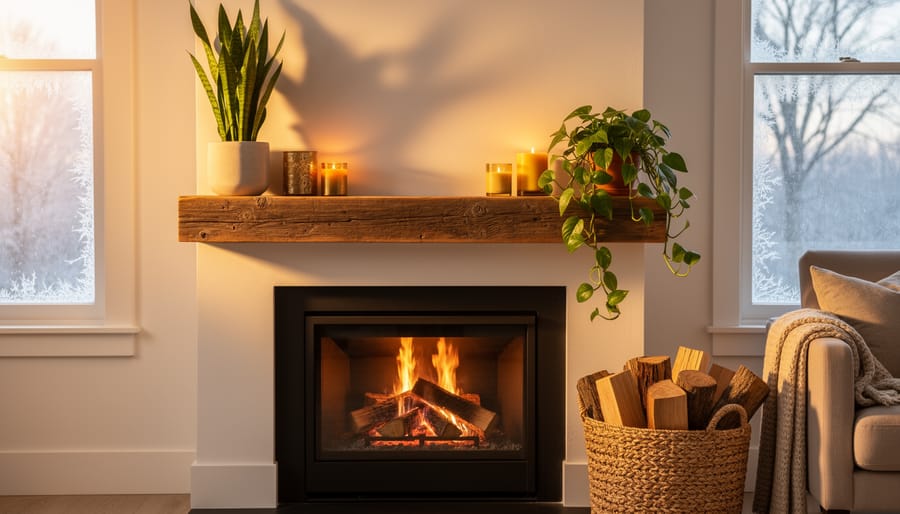
Schedule annual inspections with professionals like Mason Chimney Repair to catch efficiency issues before they become costly problems, then switch to sustainably harvested hardwoods or EPA-certified manufactured logs that burn cleaner and produce 70% less smoke than traditional firewood. Replace chemical-laden commercial cleaners with a paste of baking soda and water to scrub soot from glass doors, or use white vinegar solution to dissolve creosote buildup naturally without releasing harmful fumes into your home.
Transform your mantel into an eco-conscious focal point by sourcing reclaimed wood frames from salvage yards, displaying potted air-purifying plants like snake plants or pothos that naturally filter indoor pollutants, and arranging beeswax or soy candles in thrifted vessels instead of petroleum-based paraffin alternatives. Install a programmable damper to prevent heat loss when your fireplace isn’t in use, cutting energy waste by up to 30% while maintaining your home’s cozy atmosphere throughout winter months.
Your fireplace can be both a sustainable heat source and a stunning design statement without compromise. The key lies in making informed choices about fuel sources, cleaning methods, and decorative elements that align with environmental values while enhancing your living space. These practical strategies reduce your carbon footprint, improve indoor air quality, and create a welcoming hearth that reflects your commitment to conscious living—all while keeping maintenance simple and decor costs manageable through creative reuse and natural materials.
Why Eco-Friendly Fireplace Care Matters More Than You Think
You might think your cozy fireplace is harmless, but traditional maintenance practices can actually take a toll on both your indoor air quality and the environment. Those conventional chemical cleaners you’ve been spraying on soot and creosote? They often contain harsh toxins that release volatile organic compounds (VOCs) into your home, where your family breathes them in daily. Not exactly the warm, healthy atmosphere you’re aiming for.
Here’s something most homeowners don’t realize: inefficient burning practices waste an enormous amount of energy and pump unnecessary pollutants into the air. When you burn wood that hasn’t been properly seasoned or use outdated burning techniques, you’re creating far more smoke and particulate matter than necessary. This doesn’t just affect the air outside your home. It seeps back inside, affecting respiratory health, especially for children and anyone with asthma or allergies.
The good news? Small changes make a huge difference. By switching to eco-friendly maintenance methods, you’re protecting your family’s health while reducing your carbon footprint. Natural cleaning solutions work just as effectively as chemical-laden alternatives, without the toxic side effects. Plus, learning proper burning techniques can improve your fireplace efficiency by up to 30 percent, meaning less wood consumption and lower heating costs.
Think about it this way: your fireplace is the heart of your home during colder months. Making it healthier and more sustainable isn’t just about being trendy or environmentally conscious. It’s about creating a genuinely safe, comfortable space where your family can gather without compromise. The environmental benefits are simply a welcome bonus that extends beyond your four walls, contributing to cleaner air for everyone in your community.
Natural Cleaning Solutions That Actually Work
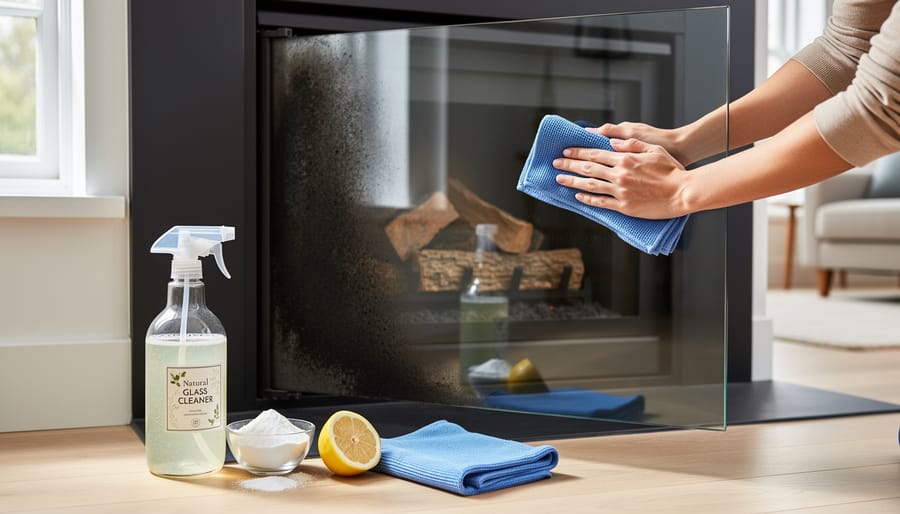
DIY Glass Door Cleaner Recipe
Say goodbye to harsh chemicals and hello to sparkling clean fireplace glass! This simple homemade cleaner works wonders on soot and grime using ingredients you probably already have in your pantry.
To make your eco-friendly glass cleaner, combine equal parts white vinegar and water in a spray bottle—typically one cup of each works perfectly. For stubborn buildup, add two tablespoons of baking soda to create a gentle paste. This mixture is one of many effective natural cleaning solutions that actually deliver professional results.
Here’s how to apply it: Make sure your glass is completely cool first. Spray the solution generously onto the surface and let it sit for 5-10 minutes to break down soot. Using a microfiber cloth or crumpled newspaper, wipe in circular motions from top to bottom. For extra stubborn spots, apply the baking soda paste directly and gently scrub with a damp cloth.
The vinegar cuts through grease while the baking soda provides gentle abrasion without scratching. Buff dry with a clean cloth for that streak-free shine, and you’re done!
Tackling Soot and Ash Naturally
Cleaning your fireplace doesn’t require harsh chemicals that harm the environment and your indoor air quality. With a few simple, natural methods, you can tackle soot and ash buildup effectively while keeping your home safe and eco-friendly.
Start by letting ashes cool completely for at least 24 hours before handling them. Once cool, use a metal scoop to collect the majority of ash, then finish with a damp cloth or slightly moistened newspaper to pick up fine particles without creating dust clouds. This simple technique works beautifully without any cleaning products at all.
For stubborn soot on glass doors, create a paste using wood ash and a bit of water. The fine abrasive quality of ash naturally scrubs away buildup without scratching. Apply with a damp cloth in circular motions, then wipe clean with a fresh cloth. You’ll be amazed at how well this zero-cost solution works.
When it comes to brick or stone, mix equal parts white vinegar and water in a spray bottle. Spritz the affected areas, let sit for five minutes, then scrub with a natural bristle brush. For more general household cleaning strategies, check out these eco-friendly cleaning tips.
Don’t toss those ashes! Wood ash makes excellent compost when used sparingly. It’s rich in potassium and raises soil pH, benefiting many garden plants. Just avoid ash from treated wood or fire starters, and limit application to thin layers mixed into your compost pile.
Sustainable Fuel Choices for a Cleaner Burn
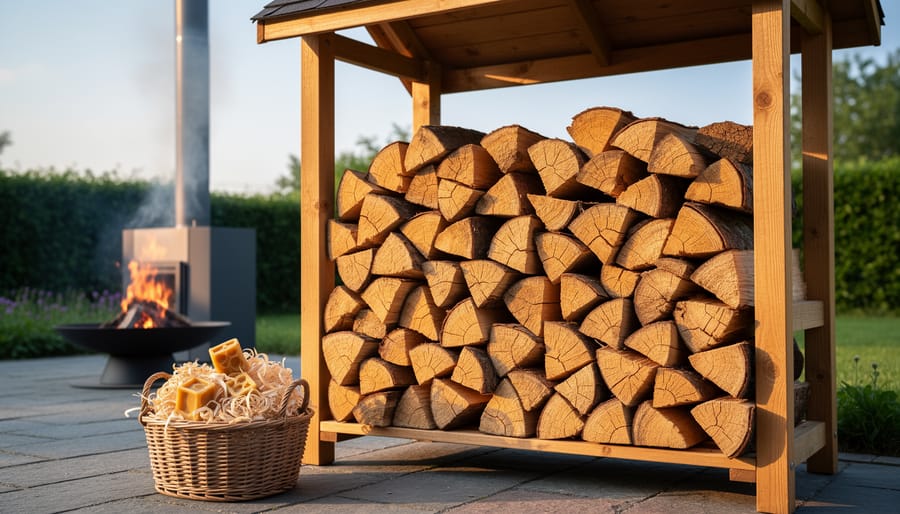
What to Burn (and What to Never Burn)
Choosing the right fuel makes all the difference for your health and the environment. Stick with seasoned hardwoods like oak, maple, or birch that have been dried for at least six months. These burn cleaner, produce more heat, and create less creosote buildup in your chimney.
Here’s what you should never toss into your fireplace: treated or painted wood releases toxic chemicals when burned, while plywood and particle board contain harmful glues and resins. Magazines, gift wrap, and cardboard might seem harmless, but the inks and coatings create dangerous fumes. Plastics, rubber, and foam are absolute no-gos, releasing carcinogens into your home and the atmosphere.
Skip the holiday temptation to burn wrapping paper or Christmas trees—dried pine burns too quickly and sends sparks flying. Driftwood contains salt that corrodes your fireplace, and those colorful fire-enhancing products? They’re adding chemicals you don’t want to breathe.
For a truly eco-friendly fire, consider sustainably sourced firewood or manufactured logs made from recycled sawdust. Your lungs, your fireplace, and the planet will thank you for making mindful choices about what fuels your cozy evenings.
Efficiency Upgrades That Pay for Themselves
Making your fireplace more efficient doesn’t have to drain your wallet. In fact, these smart upgrades typically pay for themselves within a few years through reduced energy bills and improved heating performance. Let’s explore some budget-friendly improvements that’ll make a real difference.
Start with a damper check, your first line of defense against heat loss. When your fireplace isn’t in use, an open or faulty damper is like leaving a window open all winter. Inspect yours by looking up into the firebox with a flashlight. If it’s damaged or doesn’t seal properly, replacing it costs between $200-500 when professionally installed, or around $60-150 for a DIY top-sealing damper. The simple installation involves mounting it to your chimney crown with screws and sealant, and you’ll recoup costs within two heating seasons.
Chimney caps serve double duty by keeping rain, debris, and animals out while reducing downdrafts. Expect to spend $50-200 for a quality stainless steel cap. Installation is straightforward: measure your flue, purchase the appropriate size, and secure it with the included hardware. Most homeowners complete this project in under an hour.
Glass doors transform your fireplace into an efficient heating source by preventing warm room air from escaping up the chimney when fires burn low. Quality sets range from $200-800, and while professional installation runs $100-300, confident DIYers can tackle this weekend project using the manufacturer’s template and basic tools.
Draft stoppers, the most affordable option at $20-50, slip into your chimney when not in use. These inflatable or fitted fabric blockers take seconds to install and remove, making them perfect for renters or anyone wanting an immediate solution.
Combined with other energy efficiency upgrades, these fireplace improvements create a cozier, more sustainable home while trimming your energy costs year after year.
Sustainable Mantel Decor Ideas That Feel Fresh
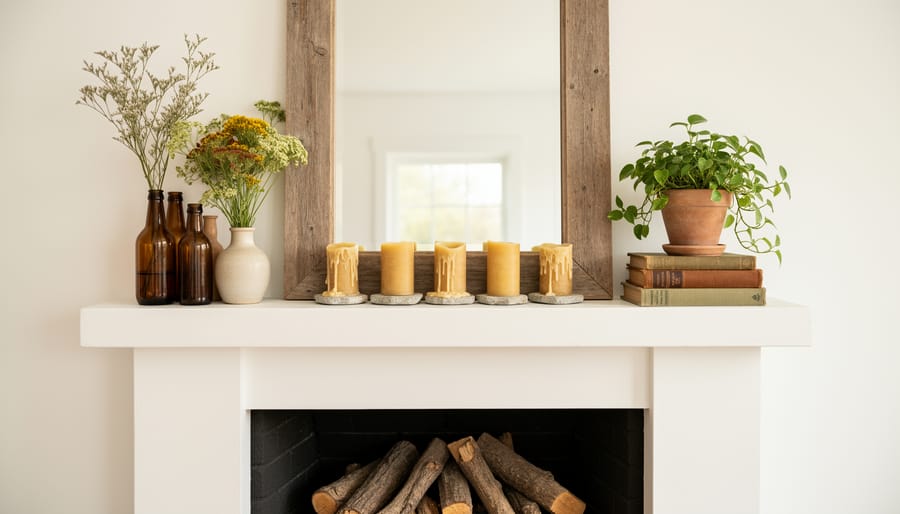
Sourcing Eco-Friendly Decor Pieces
Finding beautiful mantel decor doesn’t mean compromising your eco-friendly values. Start your search at local thrift stores and antique shops, where you’ll discover unique candleholders, vintage frames, and ceramic pieces with character that new items simply can’t match. You’re giving these treasures a second life while keeping them out of landfills.
Support your community by exploring farmers’ markets and craft fairs for handmade items from local artisans. These pieces often use reclaimed wood, natural fibers, or recycled materials, and you’ll know exactly who made them and how.
Your own backyard is a goldmine for seasonal mantel decor. Collect pinecones, interesting branches, dried flowers, or smooth stones to create ever-changing displays that cost nothing and return to the earth when you’re done with them.
When purchasing new items, seek out certified sustainable retailers who prioritize ethical production. Look for products made from bamboo, reclaimed wood, organic cotton, or recycled glass. Many online shops now specialize in eco-conscious home decor with transparent supply chains.
Remember, the most sustainable decoration is often the one you already own. Rotate items you have throughout the year to keep your mantel feeling fresh without constant consumption.
DIY Natural Mantel Displays
Creating stunning natural mantel displays is easier than you think, and these simple projects will bring eco-friendly beauty to your fireplace year-round.
Start with a foraged branch display. Collect fallen branches during your next nature walk, choosing pieces with interesting curves or textures. Clean them gently with a damp cloth and let them dry completely. Arrange 3-5 branches of varying heights in vintage glass bottles or recycled jars filled with water. This minimalist approach works beautifully for seasonal decorating and requires zero cost.
For a pinecone centerpiece, gather pinecones from your yard or local park. Bake them at 200°F for 30 minutes to eliminate bugs and open them up. Once cooled, arrange them in a wooden bowl or rustic tray, mixing in dried orange slices for a pop of color. Add battery-operated LED tea lights between the pinecones for evening ambiance.
Create a dried flower arrangement by hanging fresh flowers upside down in a dark, dry space for two weeks. Eucalyptus, lavender, and hydrangeas work particularly well. Once dried, arrange them in a ceramic pitcher or vintage tin can, trimming stems to different lengths for visual interest.
For seasonal greenery displays, trim clippings from your garden or ask neighbors for trimmings. Rosemary, cedar, and pine branches last weeks when placed in water-filled containers. Change the water every few days to extend their freshness, and compost them when they’re past their prime.
Seasonal Maintenance Checklist
Keeping your fireplace running efficiently and sustainably doesn’t have to be overwhelming. Breaking maintenance into seasonal tasks makes it manageable and ensures you’re always ready for cozy evenings by the fire.
Before burning season begins, start with a thorough chimney inspection. Check for creosote buildup, blockages from leaves or nests, and any cracks in the flue. If you notice more than 1/8 inch of creosote, it’s time for a cleaning. Consider hiring a certified chimney sweep who uses eco-friendly cleaning products. While you’re at it, test your smoke and carbon monoxide detectors and replace batteries if needed.
Inspect your firebox for damage or loose bricks, and examine the damper to ensure it opens and closes smoothly. A properly functioning damper prevents heat loss when the fireplace isn’t in use, cutting down on your heating costs and environmental impact.
During burning season, maintain your fireplace weekly. Remove ash regularly, but keep about an inch of ash in the firebox to create an insulating bed for better burning efficiency. Store removed ash in a metal container for at least a week before disposal, as coals can stay hot longer than expected. Clean your glass doors with a natural cleaner made from water and vinegar to avoid harsh chemicals.
When warmer weather arrives, give everything a deep clean. Sweep out all remaining ash and vacuum the firebox thoroughly. Close the damper completely to prevent drafts that waste air conditioning. Consider placing a chimney balloon or damper seal to improve energy efficiency.
Store fireplace tools and accessories properly during off-season months. Clean them with natural oils to prevent rust, and store eco-friendly fire starters in a dry location for next season.
You don’t need to overhaul your entire fireplace routine overnight to make a difference. Even one small eco-friendly change can create meaningful impact for your home and the environment. Maybe you start by switching to natural cleaning solutions this weekend, or perhaps you swap out one piece of mantel decor for something secondhand or handmade. These small steps add up quickly.
The beauty of sustainable fireplace care is that it doesn’t ask you to choose between environmental responsibility and the cozy, inviting atmosphere you love. You can still enjoy crackling fires, stunning mantel displays, and a warm gathering space while reducing your carbon footprint and avoiding harsh chemicals in your home.
Start where you are. Choose the tip from this guide that feels most manageable for your lifestyle and budget. Once that becomes habit, add another. Before you know it, you’ll have created a beautiful, warm, and genuinely sustainable fireplace space that reflects your values without sacrificing comfort or style. Your home, your family, and the planet will all benefit from these thoughtful choices you’re making today.