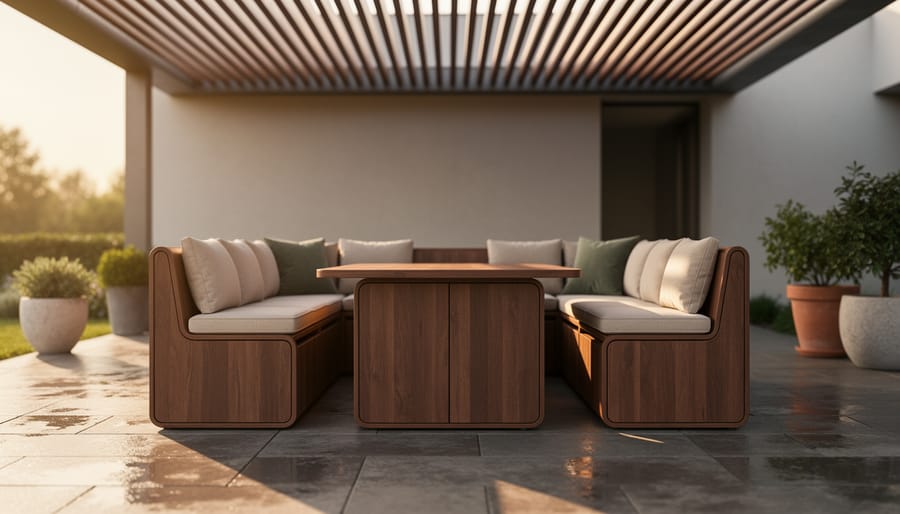
Walnut offers moderate outdoor durability with a lifespan of 5-10 years when properly maintained, making it a beautiful but high-maintenance choice that works best in covered or partially protected areas. While it’s naturally more weather-resistant than maple or oak, walnut falls short of truly weather-hardy woods like teak, cedar, or ipe when exposed to full sun and rain.
The honest truth: walnut excels as sustainable outdoor furniture for covered porches, screened patios, and seasonal pieces you can move indoors during harsh weather. Its rich chocolate tones and smooth grain create stunning visual appeal that many homeowners find worth the extra care. However, without regular sealing every 6-12 months, walnut will fade to silvery gray, develop cracks, and deteriorate faster than you’d expect for the premium price point.
Budget plays a major role in this decision. At $8-15 per board foot, walnut costs significantly more than cedar or pine but less than teak. You’re paying for aesthetics rather than longevity, which makes sense if your outdoor space is an extension of your indoor living area with limited weather exposure.
This guide breaks down walnut’s real-world performance against rain, UV rays, and temperature fluctuations. You’ll discover exactly when walnut makes sense for your situation, the maintenance commitment required to preserve its beauty, cost comparisons with proven alternatives, and expert tips for maximizing its outdoor lifespan. Whether you’re building from scratch or evaluating a walnut furniture purchase, you’ll get the practical insights needed to make a confident decision.
What Makes Walnut Different From Other Outdoor Woods
Walnut brings a distinctive character to outdoor furniture that sets it apart from traditional outdoor wood choices. Understanding these unique qualities helps you make an informed decision about whether it’s the right fit for your patio or garden space.
The most striking difference lies in walnut’s density and structure. Black walnut clocks in at around 38 pounds per cubic foot, making it a moderately dense hardwood. This density gives walnut furniture a solid, substantial feel that resists warping and denting from everyday use. The wood’s natural oils provide some inherent moisture resistance, though not quite at the level of tropical hardwoods like teak.
Walnut’s rich chocolate-brown color with its characteristic purple undertones creates an elegant aesthetic that many homeowners find irresistible. The grain pattern flows beautifully, with gentle waves and occasional dramatic streaks that make each piece unique. This visual appeal makes walnut particularly popular for those seeking eco-conscious outdoor furniture that doubles as a design statement.
| Wood Type | Density (lb/ft³) | Weather Resistance | Maintenance |
|---|---|---|---|
| Walnut | 38 | Moderate | High (seasonal sealing) |
| Teak | 41 | Excellent | Low (optional oiling) |
| Cedar | 23 | Good | Medium (annual treatment) |
| White Oak | 47 | Very Good | Medium (regular sealing) |
However, walnut lacks the specialized weather-fighting compounds found in woods like teak or cedar. It doesn’t contain the same level of natural preservatives that make those species nearly maintenance-free outdoors. This means walnut requires more attention to protective finishes and proper care to maintain its beauty and structural integrity over time, particularly in harsh weather conditions.
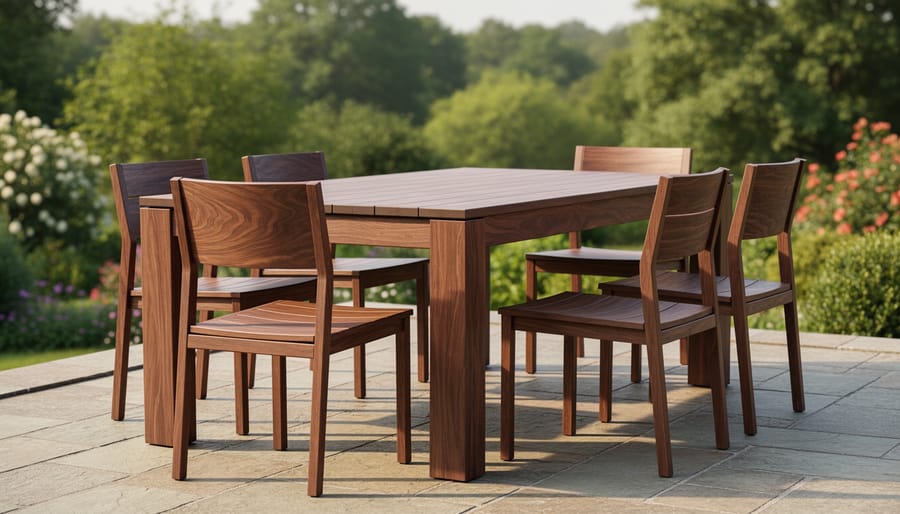
The Real Weather Resistance of Walnut Furniture
How Walnut Handles Moisture and Rain
Here’s the honest truth about walnut and water: while walnut has some natural weather resistance, it’s not naturally waterproof. Think of it as having a light raincoat rather than full armor against the elements.
Walnut contains natural oils that provide moderate protection against moisture, which is better than woods like pine or maple. However, without proper treatment, exposure to rain and humidity will eventually take its toll. You’ll notice the wood starting to absorb water, which leads to swelling, warping, and potential cracking as it repeatedly gets wet and dries out.
The biggest concern is what happens during freeze-thaw cycles. Water absorbed into the wood expands when it freezes, causing internal damage that weakens the structure over time. In consistently humid climates, untreated walnut also becomes vulnerable to mold and mildew growth, which can stain and deteriorate the wood.
The good news? With regular sealing using quality exterior wood finishes, you can dramatically improve walnut’s moisture resistance. Plan on reapplying sealant every 6-12 months depending on your climate. If you’re willing to commit to this maintenance schedule, walnut can handle occasional rain and moisture reasonably well. Just don’t expect it to perform like naturally water-resistant woods such as teak or cedar without your active involvement in protecting it.
UV Exposure and Color Changes
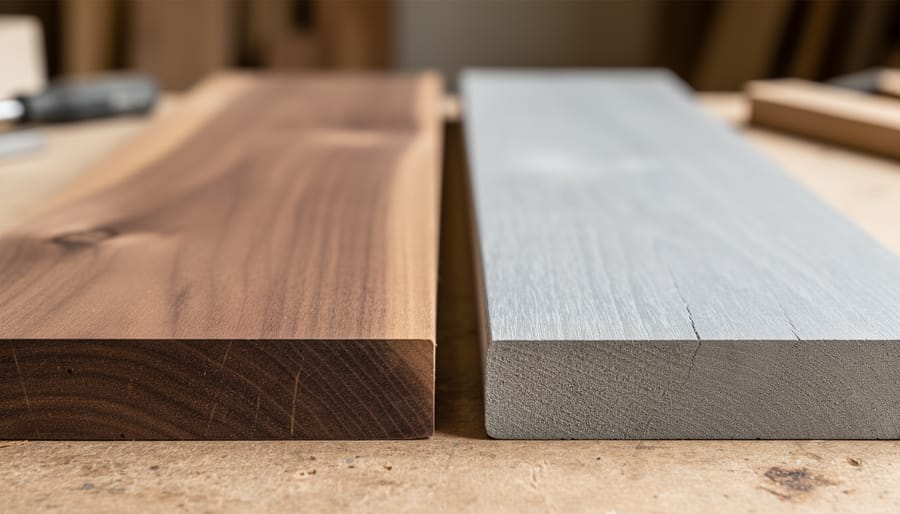
Here’s the thing about walnut outdoors—it won’t stay that gorgeous chocolate-brown color you fell in love with at the furniture store. When exposed to UV rays and weather, walnut naturally develops a silvery-gray patina over time, similar to what happens with teak. This color transformation is purely cosmetic and doesn’t compromise the wood’s structural integrity one bit. The change happens gradually, typically becoming noticeable within the first few months.
Whether this weathered look works for you is entirely personal preference. Some homeowners absolutely love the sophisticated, driftwood-style aesthetic that develops, finding it adds character and a natural, lived-in charm to their outdoor spaces. Others prefer maintaining walnut’s original rich tones through regular application of UV-protective oils or sealers. If you’re someone who appreciates the beauty of natural aging—think worn leather or copper patina—you might embrace this transformation. However, if keeping that deep walnut color is important to your design vision, plan for consistent maintenance every few months to preserve it.
Where Walnut Excels for Multi-Functional Pieces
Walnut truly shines when you need furniture that blurs the line between indoor and outdoor living. Rather than committing to full outdoor exposure, there are sweet spots where walnut’s beauty and moderate weather resistance work perfectly together.
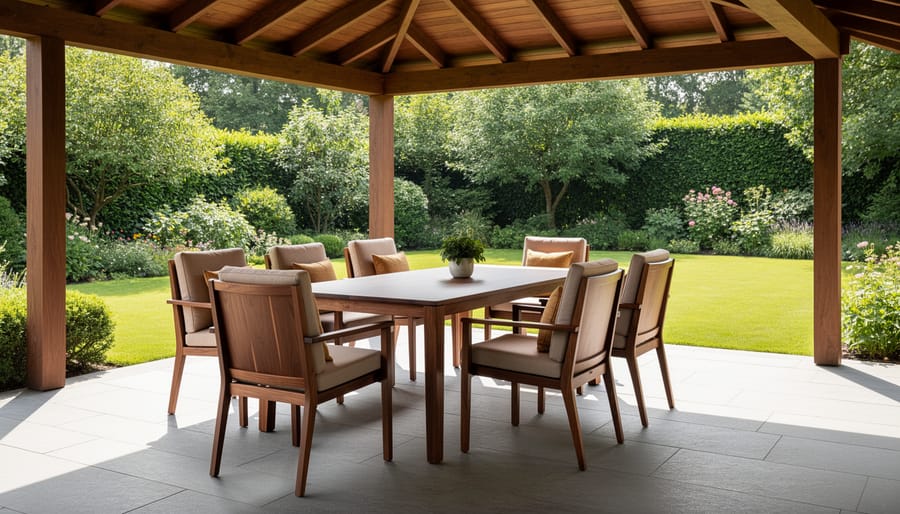
Covered patios and porches are walnut’s natural habitat outdoors. Under a solid roof or substantial overhang, your walnut pieces get about 90% protection from rain and direct sun while still enjoying fresh air and outdoor ambiance. A walnut dining table on a covered deck gives you that sophisticated look without the full assault of the elements. You’ll still want to apply a good outdoor finish and reapply it annually, but you won’t be fighting constant moisture like you would in completely exposed areas.
Three-season rooms are another ideal scenario. These screened or windowed spaces offer even more protection while maintaining that indoor-outdoor feel. Walnut furniture here requires minimal special treatment beyond what you’d do indoors, making it a practical choice that doesn’t compromise on aesthetics.
The real magic happens with portable pieces. Think accent tables, plant stands, serving carts, or occasional chairs that you can move around as needed. During a summer dinner party, roll that gorgeous walnut bar cart onto the patio. When the weather turns, bring it back inside. This flexibility means you’re not locked into choosing between indoor elegance and outdoor durability.
For inspiration on incorporating walnut into these transitional spaces, check out various porch decor ideas that showcase how natural wood tones elevate covered outdoor areas.
Smaller furniture pieces also benefit from walnut’s strengths. Side tables, benches, and planters can be easily repositioned or brought under cover when storms approach. This hands-on approach lets you enjoy walnut’s rich character without the set-it-and-forget-it requirement of permanent outdoor furniture.
The key is matching walnut to situations where you can provide some level of protection or flexibility. When you do, you get furniture that transitions seamlessly between spaces, maintains its beauty with reasonable care, and gives you that premium look that cheaper outdoor materials simply can’t match.
The Maintenance Reality: What You’ll Actually Need to Do
Initial Treatment and Sealing
Before your walnut furniture spends its first night outdoors, proper preparation is essential to maximize its lifespan. Think of this initial treatment as giving your furniture a protective shield against the elements.
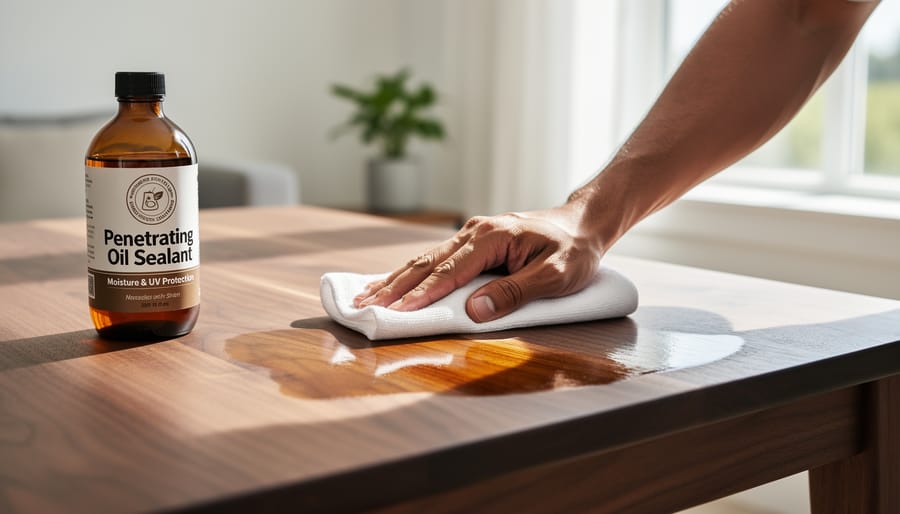
Start by ensuring your walnut pieces are clean and completely dry. Lightly sand the surface with 220-grit sandpaper to open the wood’s pores, which helps the finish penetrate more effectively. Wipe away all dust with a tack cloth before applying any product.
You’ll need to choose between two main finish types. Penetrating oils, like tung oil or Danish oil, soak into the wood fibers and provide protection from within. They’re my favorite for walnut because they enhance the wood’s natural beauty and are easier to reapply during maintenance. Apply thin coats with a clean cloth, allowing 24 hours between each layer. Plan for three to four coats initially.
Film-forming finishes, such as spar urethane or marine varnish, create a protective layer on top of the wood. These offer stronger moisture resistance but can show wear more noticeably over time. Apply with a high-quality brush using long, even strokes, and allow proper drying time between coats as specified by the manufacturer.
Regardless of which finish you choose, work in a well-ventilated area with temperatures between 50-90 degrees Fahrenheit. Avoid applying finishes in direct sunlight or high humidity, as this affects drying and can cause uneven results. Give your furniture at least 72 hours to cure fully before exposing it to outdoor conditions.
Ongoing Care Through the Seasons
To keep your walnut outdoor furniture looking gorgeous year after year, let’s walk through a simple seasonal care routine that won’t eat up your weekends.
During spring and summer, when your pieces get the most use, plan to clean them monthly with a gentle soap-and-water solution. Mix a few drops of mild dish soap into warm water, wipe down surfaces with a soft cloth, and rinse with clean water. This prevents dirt buildup that can trap moisture against the wood.
Resealing is your furniture’s best friend. For pieces in full sun or high-exposure areas, apply a fresh coat of outdoor wood sealer or oil every 4-6 months. If your furniture lives under a covered patio or gets partial shade, you can stretch this to twice a year—typically in spring before peak season and fall before winter arrives. Watch for water absorption as your signal: when water no longer beads up on the surface, it’s time to reseal.
Fall prep is crucial. Give everything a thorough cleaning and final seal coat before temperatures drop. If you have space, bringing walnut furniture indoors or into a garage during winter dramatically extends its life, especially in harsh climates with freeze-thaw cycles.
For year-round outdoor pieces, invest in quality furniture covers during off-season months. They’re much cheaper than replacement furniture and protect against snow, ice, and excessive moisture that walnut particularly dislikes. A little seasonal attention means your investment stays beautiful for decades.
Cost Analysis: Is Walnut Worth the Investment?
Let’s talk numbers, because walnut definitely commands a premium price. You’re typically looking at $15-25 per board foot for quality walnut lumber, compared to $3-8 for pressure-treated pine or cedar. That’s roughly three to five times more expensive upfront, which can make or break a furniture budget.
Here’s the reality check: if you’re building a simple bench that’ll sit fully exposed to harsh weather year-round, walnut probably isn’t your smartest investment. Even with meticulous maintenance, you’re asking a lot from any hardwood in those conditions. In this scenario, teak, eucalyptus, or quality synthetic materials offer better value for your money.
However, walnut starts making financial sense in specific situations. If you’re creating furniture for covered patios, screened porches, or pieces you’ll move to protected storage during winter months, the investment equation shifts dramatically. With proper care and limited weather exposure, walnut furniture can last 15-20 years or more, developing that gorgeous silvery patina many homeowners love.
Think about cost per year of enjoyment. A $500 walnut table that lasts 20 years costs you $25 annually. A $150 pine alternative that needs replacing every 5 years actually costs $30 per year, plus the hassle of rebuilding or repurchasing.
The premium makes particular sense when aesthetics really matter to you. Walnut’s rich chocolate tones and stunning grain patterns create an upscale look that’s hard to replicate with budget alternatives. If your outdoor space is an extension of your indoor living area where you entertain frequently, that visual impact carries real value.
Bottom line: walnut is worth the investment for semi-protected outdoor furniture when you value beauty, plan to maintain it properly, and intend to keep pieces long-term. For fully exposed, low-maintenance situations, save your money and choose weather-resistant alternatives designed specifically for outdoor punishment.
Better Alternatives If Walnut Isn’t Right for You
If walnut isn’t the right fit for your outdoor space, don’t worry. There are plenty of excellent alternatives that might actually work better for your specific situation.
| Material | Best For | Price Range |
|---|---|---|
| Teak | Full sun/rain exposure, minimal maintenance lifestyle | $$$ |
| White Oak | Budget-conscious buyers needing natural durability | $$ |
| Cedar | Covered patios, naturally rot-resistant on a budget | $ |
| Synthetic/Composite | Zero maintenance preference, extreme climates | $-$$ |
Teak remains the gold standard for outdoor furniture if you live in consistently rainy or humid climates. While it costs more upfront, you’ll never need to apply finishes, and it can handle decades of neglect while developing an attractive silver patina.
White oak offers similar water resistance to walnut but at a lower price point. It’s an especially smart choice if you’re handy with DIY finishing projects and want authentic wood character without the premium cost.
For covered porches or pergola areas, cedar provides natural rot resistance and a pleasant aroma. It’s softer than hardwoods, so expect some dents over time, but it’s incredibly affordable and easy to work with for DIY builds.
If you’re in harsh climates with extreme temperature swings or simply want a set-it-and-forget-it solution, high-quality synthetic materials like polywood have come a long way. They won’t give you the warmth of real wood, but they’ll look consistently good for years without any maintenance beyond occasional cleaning. The best part? No staining, no sealing, and no guilt about leaving them out year-round.
So, is walnut good for outdoor furniture? The answer is a qualified yes, particularly if you’re working with covered patios, screened porches, or pieces that split time between indoors and outdoors. Walnut shines as a beautiful, durable option for homeowners who appreciate fine wood and don’t mind investing time in maintenance. It’s genuinely excellent for multi-functional furniture that deserves protection from harsh elements.
That said, walnut isn’t the best choice for fully exposed deck furniture or coastal environments with relentless sun and salt air. If you’re looking for low-maintenance, all-weather solutions, you’ll want to explore other hardwoods or synthetic alternatives.
The key takeaway here is simple: there’s no one-size-fits-all answer to outdoor furniture selection. Your climate matters. Your willingness to apply sealant twice yearly matters. How you’ll use the furniture and where it’ll live matters tremendously. When you’re planning your space and exploring outdoor living ideas, match your wood choice to your specific situation rather than following blanket recommendations. With realistic expectations and proper care, walnut can deliver years of stunning outdoor service.