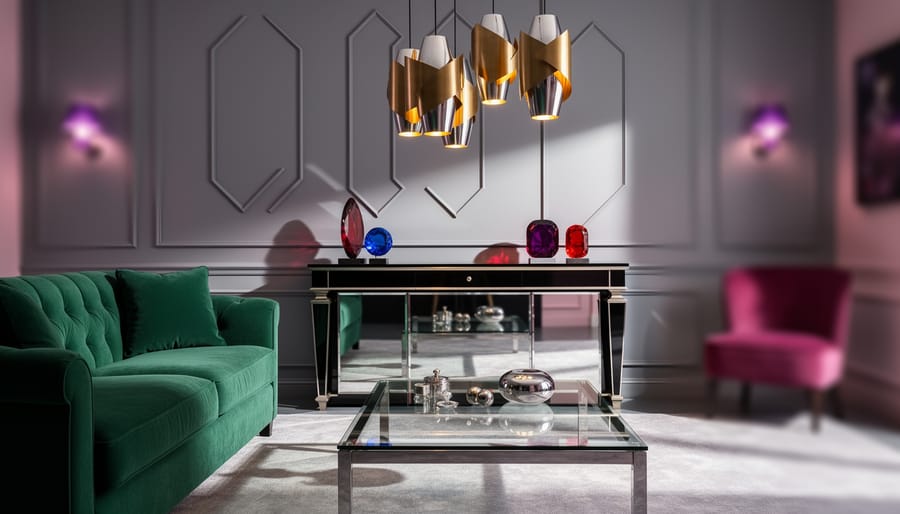
80s glam interior design is a bold, high-shine decorating style built on mirrored surfaces, glossy lacquer, rich jewel tones, and plenty of metallic sparkle. Think black and chrome, pink and gray, glass tabletops, and sculptural lighting that makes a room feel like a night out. It grew out of the decade’s love of luxury and confidence, and it’s back in a big way because it delivers drama without needing a huge budget.
The trick is knowing which pieces carry the look and which ones tip it into costume territory. A single mirrored console or a velvet sofa in deep emerald can say “glam” far more convincingly than a room stuffed with every trend from 1985.
This guide walks you through how to recognize the style, the colors, materials, and signature furniture that define it, and how to bring it into different rooms so it feels fresh instead of dated. You’ll also find expert tips, a beginner-friendly DIY project, and quick answers to common questions along the way.
What 80s Glam Interior Design Really Means
Where Art Deco Glam Fits In
Think of 80s glam as Art Deco’s louder, more playful grandchild. The two share a lot of DNA: sunburst and fan motifs, strict symmetry, shiny metallic accents, and rich materials like lacquer, glass, and velvet. If you love Art Deco glam you’ll spot plenty of familiar shapes in an 80s-inspired room.
The difference is mostly attitude. Deco leans refined and architectural, with tidy lines, measured gold details, and a sense of old-Hollywood restraint. The 80s took those same ideas and turned up the volume: brighter colors, chunkier shapes, and a bit more wink. Think of a sunburst mirror in sleek brass versus one in hot pink lacquer.
Here’s the fun part: there’s no strict rulebook. You can borrow Deco’s polish where you want calm and use the 80s spirit where you want drama. If you enjoy mixing bold pieces with abandon, a little maximalist design thinking pairs beautifully with both.
How the 80s Glam Look Comes Together
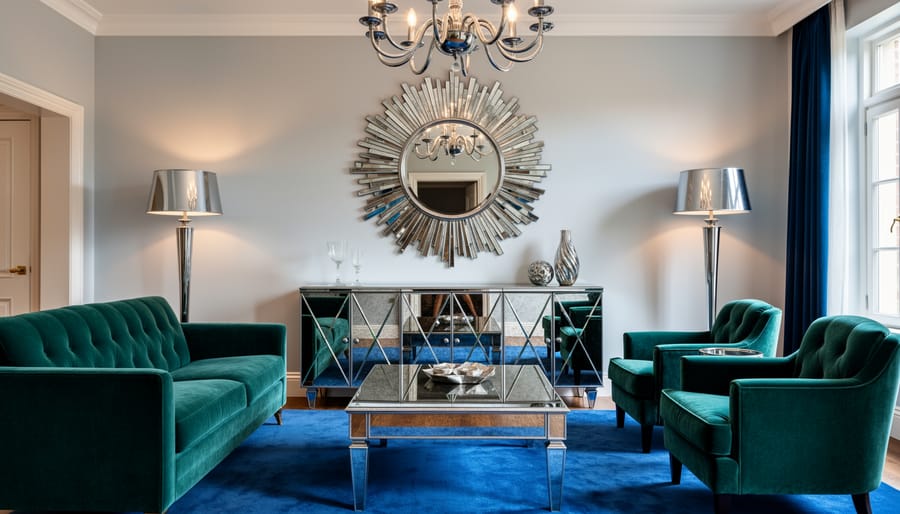
Think of 80s glam as a simple formula: shine plus contrast plus geometry, all tied together with light. Once you see how the pieces work, it stops feeling like a pile of flashy objects and starts feeling like a plan.
Start with reflective surfaces, because they do the heavy lifting. A mirrored console, a lacquered side table, or a chrome-legged chair bounces light around the room and makes the whole space feel larger and more alive. The trick is layering them at different heights, so the eye catches a glint on the wall, another on the table, and another near the floor.
Next, balance the drama. Bold color works best when it has room to breathe, so pair a saturated shade like magenta, teal, or deep emerald with crisp white, soft gray, or black. That contrast keeps the room punchy without feeling chaotic. A good rule of thumb is to let one or two colors take center stage and let neutrals fill in the gaps.
Then add geometry. Repeating a shape, such as angular mirrors, a sunburst clock, or a graphic rug, gives the room a rhythm that feels intentional. Repetition is what separates a styled space from a cluttered one.
Finally, lighting is what makes everything glow. A statement chandelier, a pair of glossy table lamps, or even warm bulbs placed near a mirror will multiply the shine you’ve built. Without good light, those shiny surfaces just sit there. With it, the whole room sparkles.
The Building Blocks: Colors, Materials, and Signature Pieces
Color Palettes That Define the Look
Color is where 80s glam gets its personality. The trick is pairing a bold shade with something steady, so the room feels confident instead of chaotic. Here are the go-to combinations:
- Black with gold or chrome: sleek, dramatic, and nightclub-ready.
- Blush pink with gray: soft but sophisticated, the most wearable pairing of the bunch.
- Teal with magenta: loud, playful, and full of that signature decade energy.
- Deep jewel tones against crisp white: rich and polished, with the white giving your eyes a place to rest.
- Emerald with navy: moody and luxe, with a hint of old-Hollywood glamour.
That last pairing is a nice bridge to Art Deco Glam in Interior Design, which leans on black, gold, emerald, and navy. Blending those deeper tones into a brighter 80s scheme gives the look a more grown-up finish. Try a magenta accent chair beside a navy velvet sofa with brass details, and you get the fun without the time-capsule feeling.
Shiny Surfaces and Statement Materials
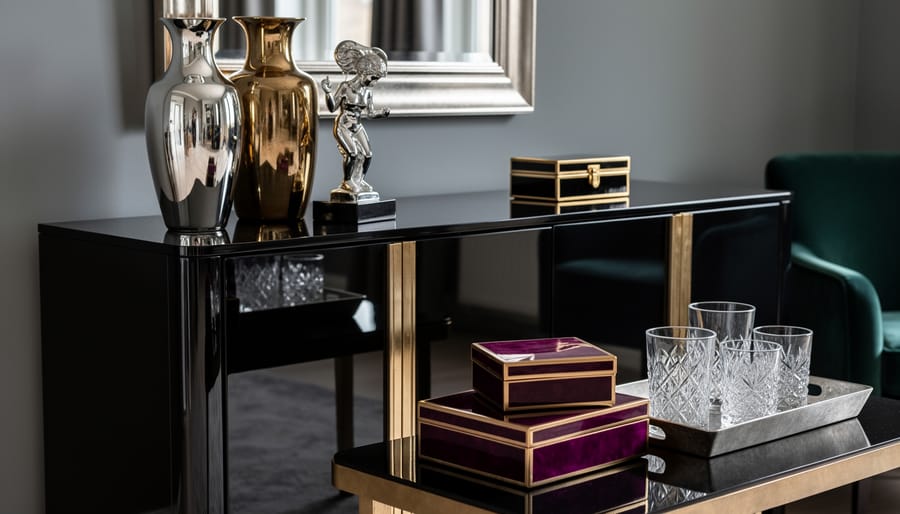
Shine is the heart of this style, so it helps to know what each material brings to the party.
– Mirrors bounce light around and make a room feel bigger and brighter. A single large mirror often does more than several small ones.
– Lacquered furniture adds a glossy, almost wet-looking finish that reads instantly as 80s.
– Glass and acrylic keep things airy. A clear coffee table or lucite chair adds sparkle without visual bulk.
– Chrome and brass deliver the metallic punch. Chrome feels cool and sleek, while brass feels warmer and a bit more Deco.
– Velvet and faux fur bring softness and texture, which keeps all that shine from feeling cold.
– Marble-look finishes add a touch of luxury, whether on a tabletop or a tray.
To avoid overwhelming a space, try the “one shiny, one soft” rule: for every reflective piece, add something plush. Stick to one dominant metal, then let a second one appear in small doses. Expert tip: if a room feels like too much, remove one shiny item and see how it breathes.
Shapes, Patterns, and Lighting
Shape is where 80s glam gets its drama. Think bold geometry: triangles, zigzags, chevrons, and stepped edges that repeat across a rug, a pillow, or a lamp base. One or two of these motifs go a long way, so pick a favorite and echo it in a couple of places rather than covering every surface.
Curves keep all that angularity from feeling stiff. A rounded or sculptural sofa, a glass-top coffee table with a chrome base, and a sunburst mirror above the console give the eye something to follow around the room. The sunburst is a nod to Deco, and it’s one of the easiest ways to add the look.
Lighting is the real secret, though. Every mirror, lacquered finish, and metallic accent is only as dramatic as the light that hits it. Crystal-style chandeliers, sculptural floor lamps, and warm accent lights bounce sparkle off those reflective surfaces and make the whole room glow. Expert tip: put your lighting on a dimmer so you can dial the glamour up in the evening.
How 80s Glam Is Used Room by Room
Living Rooms, Bedrooms, and Dining Spaces
These three rooms are where 80s glam really gets to show off, so it pays to give each one a single star piece instead of dressing everything up at once.
In the living room, a mirrored console or a glass-top coffee table with chrome legs does a lot of the heavy lifting. Add a curved velvet sofa in a jewel tone, then bounce light around with a sunburst mirror on the wall behind it. The shine makes even a modest room feel bigger and more lively.
In the bedroom, think soft luxury. A tall, tufted velvet headboard in blush, charcoal, or deep teal sets the mood right away. Pair it with mirrored nightstands and a pair of crystal-style lamps for symmetry, which is a nice nod to Deco’s love of balance.
In the dining space, let the lighting lead. A statement chandelier hung low over the table instantly signals glam. Lacquered chairs or a glossy table finish keep the sparkle going.
Expert tip: choose one hero piece per room, then support it with quieter neutrals so the shine feels intentional rather than busy.
Small Spaces, Rentals, and Entryways
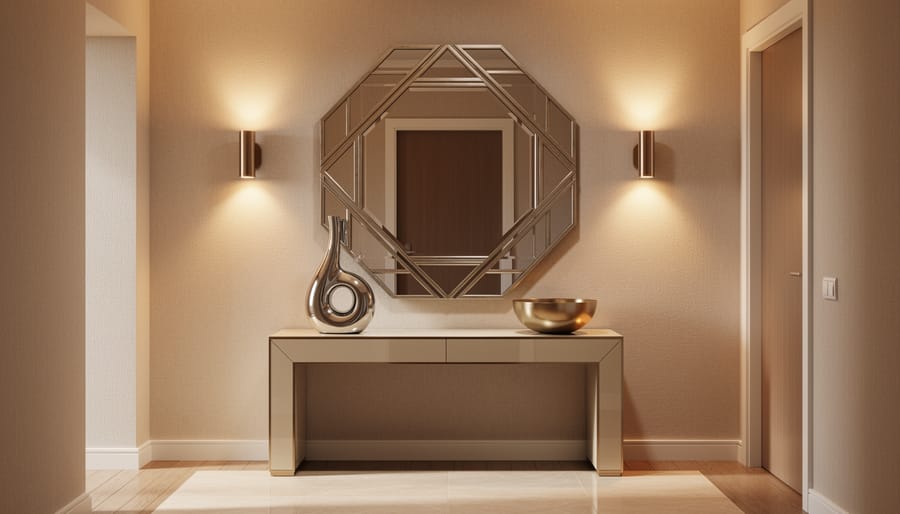
You don’t need a full living room makeover to get the 80s glam look. In a small space, one confident piece does the work of ten, and it’s the perfect approach if you rent or just want to test the style before committing.
Start with a mirror. A large leaning mirror or a sunburst piece by the front door bounces light around and makes a tight entryway feel wider. Pair it with a slim console or a floating shelf, then add a mirrored or gold-toned tray to corral keys and mail. Suddenly the drop zone looks styled instead of cluttered.
Lighting is your next easy win. Swap a plain lamp for one with a chrome or crystal-style base, or try a plug-in wall sconce that needs no electrician. Warm bulbs make all that shine feel inviting.
For a renter-friendly refresh, stick to changes you can undo. Peel-and-stick mirror tiles, removable hooks, a velvet pillow or two, and a metallic vase all come with you when you move.
Expert tip: choose just one glam moment per small area. Restraint keeps the room feeling polished rather than crowded.
Try It Yourself: A Simple Weekend DIY Glam Mirror Accent
You don’t need a big budget or fancy tools to get that high-shine look. A glam mirror accent is one of the easiest ways to start, and you can finish it in a weekend. Like any modern revival of a past style, the trick is keeping it to one confident statement rather than filling the whole room.
What you’ll need:
– A wood or plastic picture frame (flat styles work best)
– A mirror cut to fit, or self-adhesive mirror tiles
– Metallic spray paint in gold, chrome, or brass
– Painter’s tape and old newspaper
– Fine sandpaper (about 220 grit)
– Strong adhesive suited to glass and your frame material
– Gloves and a dust mask
Prep and safety first. Work outdoors or in a well-ventilated space, and wear your gloves and mask while sanding and spraying. Always follow the directions printed on your paint and adhesive.
Steps:
1. Remove the glass and backing from the frame, then lightly sand the surface so the paint grips. Wipe away the dust.
2. Lay the frame on newspaper and tape off any areas you want to keep unpainted.
3. Shake the can well, then spray in thin, even coats from about a foot away. Two or three light coats look smoother than one heavy one, and drips are the most common beginner slip.
4. Let each coat dry as directed, then peel the tape and let the frame cure fully.
5. Attach your mirror or arrange the tiles inside the frame, pressing firmly so they sit flat. Let the adhesive set before you move anything.
6. Hang it, or lean it on a console table, and add a lamp beside it so the light bounces around the room.
Expert tip: Try tiles in a sunburst or fan layout for a nod to Art Deco geometry. Renters can skip the wall entirely and display the finished piece on a dresser or tray. Either way, you’ve added shine and personality in just a couple of days.
Common Questions About 80s Glam Decor
Most readers have the same handful of worries before they commit, so here are straight answers to the ones that come up most.
Is 80s glam still in style?
Yes, in a refined form. Mirrored pieces, velvet, and brass are back in many homes, just used with a lighter hand than the original decade.
How do I avoid making it look dated?
Pick two or three statement pieces instead of filling the room with shine. Borrow the clean geometry and rich materials of Art Deco Glam in Interior Design, which keeps the look polished instead of costume-like.
Can I mix it with modern or minimalist decor?
Absolutely. Glam pieces make wonderful accents in a calm room, and it’s easy to mix with minimalism by letting one mirrored console or sculptural lamp be the star against quiet, neutral walls.
What is the most affordable way to start?
Start small: a framed mirror, a metallic tray, or a can of spray paint to update a thrifted lamp. These low-cost swaps deliver the sparkle without a big commitment.
A good rule of thumb is to let the room breathe. If you already have bold color or a busy pattern, keep the metallics limited to one or two finishes so everything feels intentional. You can always add more shine later, one piece at a time, as you figure out what you love.
Thrift stores, flea markets, and online resale listings are great places to hunt for mirrored furniture, brass accents, and vintage lighting at friendly prices. Give secondhand finds a good cleaning, and they often look brand new.
At its heart, 80s glam is about shine, boldness, and confidence. It’s mirrors that catch the light, lacquer and chrome that make a room feel alive, and color that isn’t afraid to be noticed. When you let those pieces lead and keep your lines clean, the style feels exciting instead of dated.
That’s where a little Art Deco Glam in Interior Design comes in. Symmetry, geometric shapes, and rich metallics add a polished backbone, so the room reads as intentional and timeless rather than like a throwback.
You don’t need to redo a whole space to start. Pick one small change this weekend: hang a sunburst mirror, swap in a brass lamp, or style a mirrored tray with a few favorite things. Step back, flip on the lights, and enjoy the glow you just created. Your home is allowed to sparkle.