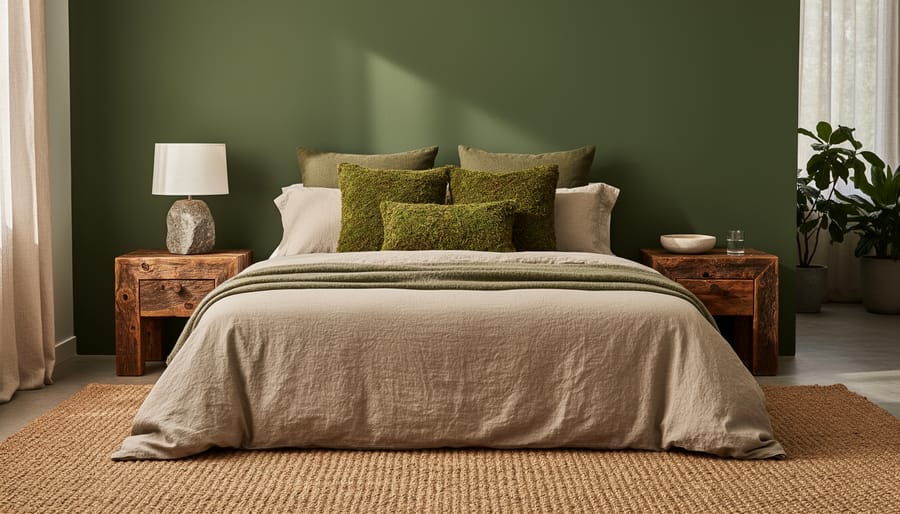
Creating a forest-inspired bedroom takes about a weekend and requires no special skills, just a clear plan for layering natural colors, organic textures, and woodland-themed accents throughout your space. The transformation centers on three core elements: an earthy color palette of greens, browns, and mossy tones; textural materials like wood, stone, and linen; and carefully chosen decor that evokes the serenity of a woodland retreat. This approach to nature-inspired design works because it builds atmosphere gradually, allowing you to control both your budget and the intensity of the theme.
You’ll start by establishing your foundation with wall treatments and flooring, then layer in furniture and textiles, finishing with the details that bring the forest indoors. The key is balance. Too much green or too many tree motifs can feel overwhelming, while thoughtful placement of natural materials creates a calming refuge that genuinely mimics the peace you feel walking through the woods. Most people complete the basic transformation in two to three days, with ongoing refinements as they discover which woodland elements resonate most with their personal style.
What You’ll Need to Transform Your Bedroom
Before you start shopping, gather everything you’ll need in one organized list. Breaking your materials into categories makes the transformation manageable and helps you tackle the project in phases without feeling overwhelmed.
Paint and Wall Treatments
Your forest foundation starts with the walls. You’ll need interior paint in earthy tones like moss green, bark brown, sage, or stone gray. If you prefer wallpaper, look for botanical or forest scene designs. Don’t forget painter’s tape, drop cloths, rollers, brushes, and primer if you’re working with dark existing colors.
Textiles and Soft Furnishings
Natural fabrics bring warmth and texture to your forest retreat:
- Linen or cotton bedding in neutral or green tones
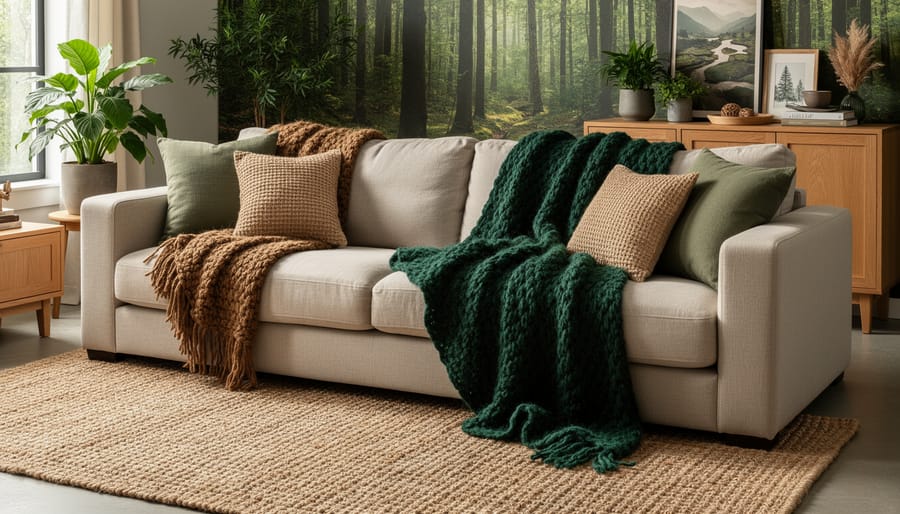
- Wool or chunky knit throw blankets
- Curtains in natural fabrics (avoid synthetic sheers)
- Area rug in jute, sisal, or wool with organic patterns
- Throw pillows featuring leaves, ferns, branches, or wildlife prints
Furniture and Wood Elements
You don’t need to replace everything, but key wood pieces anchor the theme. Consider a wooden bed frame, nightstands in natural finish, a reclaimed wood bench, or floating shelves. Rattan baskets and bamboo organizers add functional forest touches without major investment.
Lighting Components
Soft, layered lighting mimics dappled sunlight. Stock up on warm-toned LED bulbs (2700K-3000K), string lights or fairy lights, natural material pendant shades, and dimmer switches for your overhead fixture. A salt lamp adds ambient glow and fits the organic aesthetic.
Plants and Planters
Living greenery completes the forest feel. Choose low-maintenance options like pothos, snake plants, ferns, or peace lilies. You’ll need planters in varying heights and natural materials (ceramic, terracotta, woven baskets), plus basic plant care tools and quality potting soil.
Decorative Accessories
Finish with botanical prints or nature photography, driftwood pieces, river stones, essential oil diffuser with woodsy scents (cedar, pine, eucalyptus), and natural woven storage baskets. These details tie the whole room together without cluttering your peaceful sanctuary.
Before You Begin: Important Considerations
Before you start painting walls or hauling furniture, take a few minutes to address safety and prep work. This planning prevents damage to your space and keeps everyone in your household safe.
If you’re painting or applying wallpaper, open windows and use fans to keep air circulating. Paint fumes and adhesive odors can linger for days in a closed bedroom, causing headaches and respiratory irritation. Work during daylight hours when you can leave doors and windows open.
Check your walls before installing heavy wooden shelves, large mirrors, or planters. Use a stud finder to locate solid anchoring points. Drywall alone won’t support substantial weight, and a falling shelf can cause injury or damage your flooring. If you’re mounting anything over 10 pounds, anchor it properly into studs or use heavy-duty wall anchors rated for the weight.
Research every plant before bringing it into your bedroom. Common houseplants like pothos and peace lilies are toxic to cats and dogs if chewed. If you have curious pets or small children, stick to non-toxic options like spider plants, Boston ferns, or parlor palms. The ASPCA website maintains a searchable database of pet-safe plants.
Be mindful of humidity levels as you add greenery. Multiple plants release moisture into the air, which creates a cozy atmosphere but can also encourage mold growth in poorly ventilated spaces. Use a small hygrometer to monitor humidity, and aim to keep it between 30-50% by cracking a window or running a dehumidifier if needed.
Step-by-Step: Building Your Forest Sanctuary
Step 1: Establish Your Forest Foundation with Color
Your bedroom’s color palette sets the entire mood, so start here before adding any furniture or decor. Choose one primary wall color that anchors your forest vision. Moss green creates an immersive canopy feel, bark brown grounds the space with earthy warmth, and soft stone gray mimics misty morning light filtering through trees. Test paint samples on your walls first and observe them at different times of day, since natural light dramatically shifts how these colors appear.
For painting, use a roller for large surfaces and an angled brush for edges. Apply two coats for even coverage, letting each dry completely. Understanding color’s secret role in design helps you select shades that actually relax rather than energize.
Consider creating an accent wall behind your bed with forest-themed wallpaper featuring botanical prints, tree silhouettes, or woodland scenes. This focal point adds depth without overwhelming the room. Peel-and-stick options work well for renters and make future changes easier. Apply wallpaper from top to bottom, smoothing out bubbles as you go with a plastic smoother tool. Keep patterns subtle if you plan to add many plants later, or go bold if your space needs a dramatic forest statement.
Step 2: Layer in Natural Textures Through Textiles
Start with your bedding as the largest textile canvas. Choose a duvet or comforter in natural fabrics, linen wrinkles beautifully and breathes well, while organic cotton feels soft and crisp. Look for earthy tones like moss green, taupe, or cream. Layer a chunky knit throw blanket in wool or cotton at the foot of the bed for texture contrast.
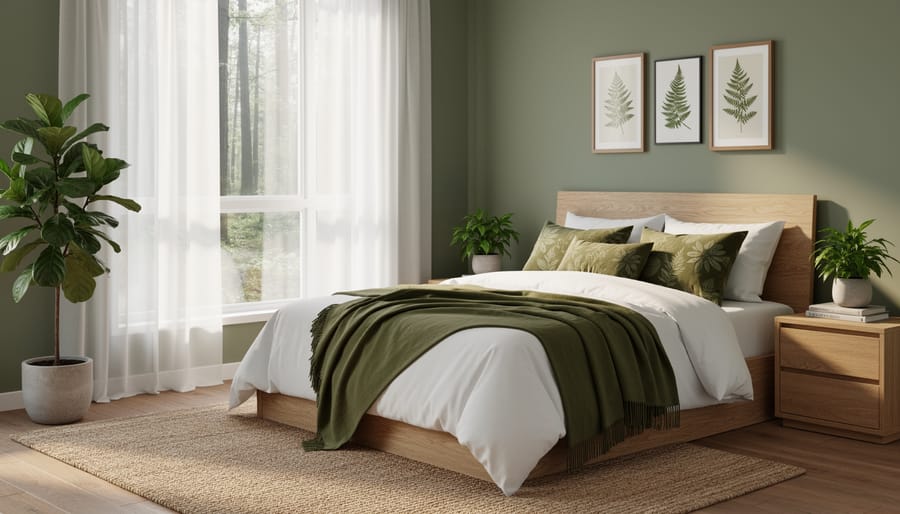
For pillows, mix sizes and textures. Combine smooth linen shams with pillows featuring forest motifs, embroidered ferns, subtle leaf prints, or wildlife silhouettes. Add one or two pillows in chunky weave or cable knit for tactile variety.
Hang curtains in heavyweight linen or cotton to soften window light. Natural, undyed fabrics work beautifully, or choose muted greens and browns. Floor-length panels add height and drama.
Anchor the space with a jute or wool rug. Jute brings organic, grasslike texture underfoot, while a low-pile wool rug in forest green or brown adds warmth. Position it so at least the front legs of your bed rest on it, creating visual connection between floor and furnishings.
This layering creates depth that mimics the varied textures you’d encounter walking through actual woodland.
Step 3: Introduce Wood Elements and Organic Furniture
Start with your bed frame, it’s the room’s anchor piece. Choose solid wood in lighter tones like oak or ash for an airy forest canopy feel, or opt for darker walnut if you’re going for old-growth depth. A live-edge headboard instantly brings that organic, just-cut-from-the-forest vibe without overwhelming the space.
Next, layer in supporting pieces made from bamboo or rattan. A bamboo nightstand paired with a rattan chair creates texture variety while staying cohesive. Don’t match everything perfectly, forests aren’t uniform. Mix wood finishes: pair a weathered reclaimed wood dresser with a smoother bedside table.
Position larger wooden pieces first, leaving breathing room around each. Your dresser shouldn’t crowd the bed, and chairs need clearance to function. Think about sightlines: place a sculptural wood bench at the foot of your bed where you’ll notice its grain pattern daily.
Add smaller accents last, a driftwood-style mirror, wooden floating shelves, or a carved bowl on your nightstand. These finishing touches tie the room together without creating clutter.
Step 4: Create Dappled Forest Lighting
Start with your overhead lighting. Replace harsh white bulbs with warm LEDs (2700K-3000K) that cast a golden glow similar to afternoon sunlight. Install a dimmer switch if you don’t have one, it’s the single most impactful upgrade for controlling ambiance.
String lights create that signature dappled effect. Drape warm white fairy lights along your headboard, weave them through a ceiling-mounted branch, or hang them in loose swags across one wall. Position them where they’ll cast gentle shadows rather than shine directly in your eyes.
For task lighting, choose pendant lamps or table lamps with natural shades, rattan, woven bamboo, or linen diffusers all soften the light beautifully. A Himalayan salt lamp on your nightstand adds a peachy glow and doubles as a decorative element.
Layer your lighting at different heights: a floor lamp in one corner, bedside lamps at mid-level, and overhead or string lights above. This mimics how light filters through forest canopy at various depths. Aim for multiple low-wattage sources instead of one bright fixture, forests never have a single harsh light source.
Step 5: Bring in Living Plants and Greenery
Living plants transform your bedroom from forest-themed to genuinely forest-like. Start with low-maintenance varieties that thrive indoors and tolerate lower light conditions. Snake plants and pothos are nearly indestructible options that purify air while you sleep. Boston ferns add lush, cascading greenery reminiscent of woodland undergrowth, while peace lilies contribute elegant white blooms and excellent air-cleaning properties.
Arrange plants at varying heights to mimic a natural forest floor. Place a tall snake plant in one corner, medium-sized ferns on nightstands or dressers, and trailing pothos on shelves or hanging planters. This layered approach creates depth and visual interest rather than a flat, staged look.
Choose pots in natural materials like terracotta, ceramic in earthy tones, or woven baskets. Mix sizes and textures, but keep the color palette cohesive with browns, greens, and neutral tones.
Water most bedroom plants weekly, allowing soil to dry slightly between waterings. Wipe dust from leaves monthly to maximize their air-purifying benefits. Start with three to five plants and add more as you gain confidence in their care.
Step 6: Add Forest-Themed Finishing Touches
The final layer transforms your bedroom from nature-themed to truly immersive. Start with botanical prints or framed pressed leaves on the walls, these anchor your forest story without competing with the plants you’ve already placed. Look for vintage botanical illustrations or modern photography featuring forest scenes, tree rings, or close-ups of bark texture.
Curate a small collection of natural sculptures. A piece of driftwood on your dresser or windowsill adds sculptural interest, while smooth river stones grouped in a shallow bowl bring the forest floor indoors. Keep these elements few but intentional, three to five accent pieces maximum prevents visual clutter.
Hang nature-inspired artwork above your headboard or on an accent wall. Choose pieces that feature muted greens, browns, and grays rather than bright, tropical colors.
Add an essential oil diffuser with woodsy scents like cedarwood, pine, or sandalwood. The aromatherapy element completes the sensory experience, making your space feel like a forest clearing after rain.
Avoid the temptation to fill every surface. Your forest bedroom needs negative space to breathe, just like a real forest has clearings between trees. If a shelf or table looks crowded, remove one item rather than rearranging everything.
How to Know Your Forest Bedroom Is Complete
Your forest-inspired bedroom transformation is complete when the space feels like a natural retreat rather than a decorated room. Stand in the doorway and let your eyes sweep across the space. The colors should flow together without jarring contrasts, natural textures should dominate synthetic ones, and every element should feel intentional rather than randomly placed. If your gaze catches on something that feels out of place or overly artificial, that item may need adjusting or removing.
Next, engage all your senses. Close your eyes and take a deep breath. Do you smell earthy, woodsy scents from plants or essential oils rather than artificial fragrances? Run your hand along the bedding and furniture. The tactile experience should be predominantly natural, soft linens and smooth wood rather than cold metal or slick plastic. Listen for a moment. While you cannot control outside noise, the space should feel acoustically calm, with soft textiles absorbing harsh sounds.
Conduct a practical functionality check by moving through your normal bedroom routine. Can you easily access your closet? Do the plants have enough light without blocking pathways? Is the lighting adjustable for reading, getting dressed, and winding down? A successful forest bedroom balances aesthetics with livability.
The final and most important test is what I call the peace test. Spend 15 minutes sitting quietly in your transformed space. Notice your breathing and tension levels. A properly executed forest bedroom should make you feel noticeably calmer and more grounded within just a few minutes. Your shoulders should drop, your breathing should deepen, and you should feel a genuine desire to spend time there.
For ongoing maintenance, water and rotate plants weekly, dust natural surfaces with a slightly damp cloth, and refresh bedding seasonally. Every three months, evaluate whether any elements need updating. Swap out accessories with the seasons by introducing warmer, richer tones in fall and winter, then lighter greens and florals in spring and summer. This keeps the forest theme feeling alive and connected to the natural world outside.
Common Questions About Forest-Inspired Bedrooms
Can I create a forest-inspired bedroom on a tight budget?
Absolutely. Start with budget-friendly decor choices like painting an accent wall in earthy tones, adding potted plants from local nurseries, and using thrifted wooden frames or furniture pieces. Swapping out throw pillows for forest-colored options and hanging DIY botanical prints costs far less than a complete room overhaul.
How do I adapt this theme for a small bedroom?
Focus on vertical elements rather than spreading items across the floor. Mount floating shelves for plants, use a single statement piece like a forest mural or large botanical print, and choose multi-functional furniture in natural wood tones. Light colors on walls will prevent the space from feeling cramped while maintaining the nature vibe.
What’s the best way to clean and maintain natural materials?
Dust wooden furniture weekly with a microfiber cloth and treat with wood polish every few months. Vacuum jute or sisal rugs regularly and spot-clean spills immediately with mild soap and water. Wipe down plant leaves to prevent dust buildup, and rotate plants occasionally to ensure even growth.
Will a forest theme clash with my existing modern or minimalist decor?
Not if you’re selective. Stick to cleaner lines in wooden furniture, limit the color palette to two or three earthy tones, and choose simple botanical prints over busy patterns. The key is balancing natural textures with the streamlined aesthetic you already have rather than forcing rustic elements into every corner.
Your forest bedroom works best when it feels authentic to your lifestyle. If you live in a dry climate, skip moisture-loving ferns and opt for succulents or snake plants instead. Humid regions can handle more tropical greenery but require better air circulation to prevent mold on textiles. Adjust your plant selection and material choices to match what your environment naturally supports, and the space will feel more sustainable long-term.