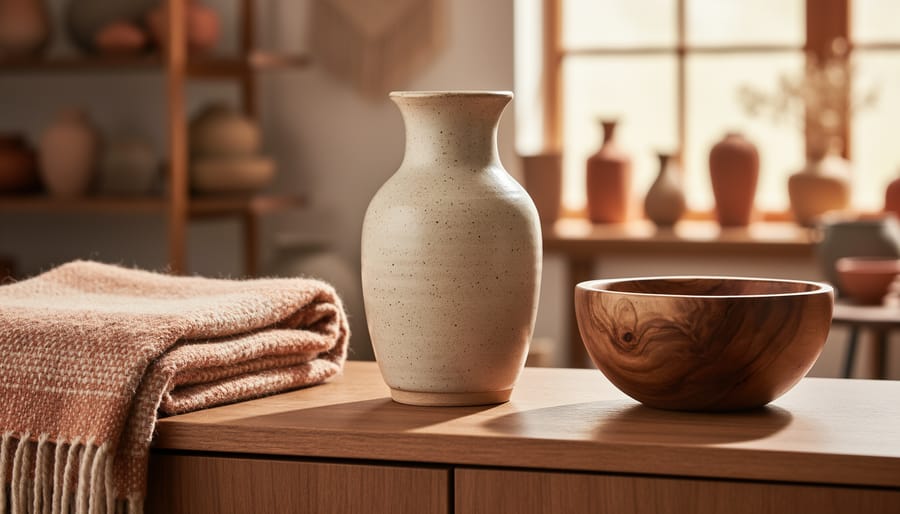
Handcrafted home decor brings one-of-a-kind character to your space through artisan-made pieces that carry the maker’s personal touch, superior materials, and techniques passed down through generations. Unlike factory-produced items, each handcrafted piece tells a story and brings warmth that mass production simply can’t replicate.
The Canadian home decor market has grown to over $16 billion in 2025 and continues expanding as more people recognize the value of investing in quality, artisan-made pieces. This shift reflects a deeper desire for meaningful interiors that feel personal rather than catalog-copied.
What sets handcrafted decor apart isn’t just aesthetics. You’re getting furniture and accessories built to last, often using traditional joinery, hand-thrown ceramics, or hand-loomed textiles. The investment pays off in durability and timelessness. A hand-carved wooden bowl or hand-woven throw looks better with age, developing a patina that factory finishes never achieve.
Finding authentic artisan work takes some effort. Local craft markets remain the best place to meet makers and see quality firsthand. Events like the Festival of Crafts in Calgary (October 29 through November 1, 2026, at Stampede Park BMO Centre) showcase over 140 Canadian artisans under one roof. The Toronto Arts and Crafts Show on July 24, 2026, at 100 Queen St W offers another excellent opportunity to source directly from makers.
Why Handcrafted Home Decor Stands Apart
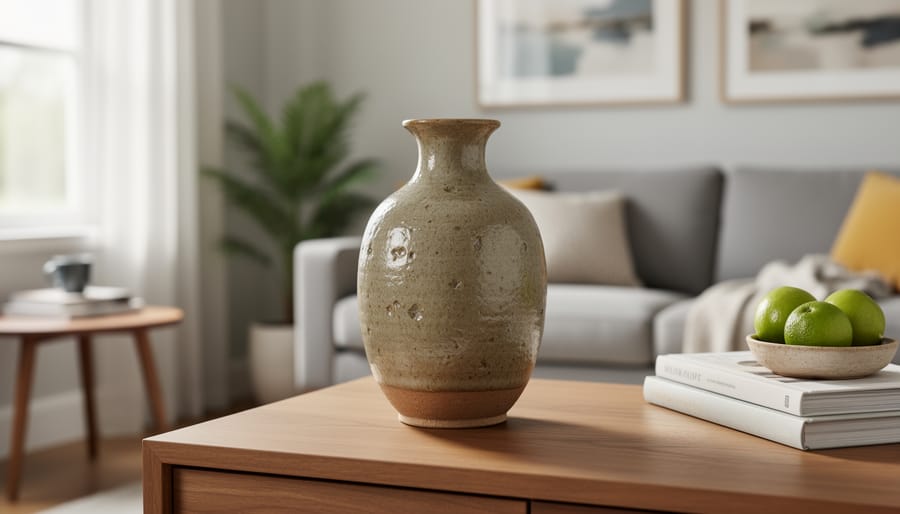
Walking into a room furnished with handcrafted pieces feels different. There’s a warmth and presence that factory-made decor simply can’t replicate, and understanding why helps you make smarter choices for your home.
The most immediate difference is uniqueness. When a potter throws a bowl on the wheel, each piece emerges with subtle variations in curve, glaze pooling, and texture. No two are identical. Mass-produced items are engineered for uniformity, stamped out thousands at a time from the same mould. That handcrafted bowl carries the maker’s touch in every ridge and imperfection, which translates to genuine character in your space rather than the sterile predictability of assembly-line goods.
Quality follows naturally from the process. Artisans select materials with care, often sourcing premium hardwoods, natural fibres, or lead-free glazes that last decades. They build to their own standards, not to a price point dictated by a distant corporate buyer. You’ll find dovetail joints instead of staples, hand-rubbed finishes instead of plastic veneers, and construction methods proven over centuries. Many makers also choose no-VOC finishes and non-toxic materials, which benefits both your indoor air quality and the environment.
Every handcrafted piece carries a story. You can often meet the person who made your dining table, learn why they chose reclaimed barn wood, or hear about the traditional weaving technique passed down through their family. That connection adds meaning mass retailers can’t manufacture. When friends ask about the ceramic lamp in your entryway, you’re sharing an artist’s journey, not reciting a product number.
Environmental and ethical considerations matter more as the Canadian home decor market grows toward a projected $22.76 billion by 2034. Handcrafted items typically generate far less waste, use fewer synthetic materials, and involve transparent production chains. You know where your money goes and what practices it supports.
Identifying genuine artisan work requires attention. Look for slight irregularities that signal hand production, visible tool marks, or signature stamps. Ask questions: who made this, where, and how? Legitimate makers happily discuss their process. Be wary of vague marketing language or items that look suspiciously uniform. The Made in Canada rules require specific substantiation for such claims, so don’t hesitate to request maker credentials.
True handcrafted decor means human hands shaped the piece from start to finish, not that a factory worker attached a handle at the end of an automated process. That distinction matters when you’re investing in items meant to last.
Popular Types of Handcrafted Pieces for Every Room
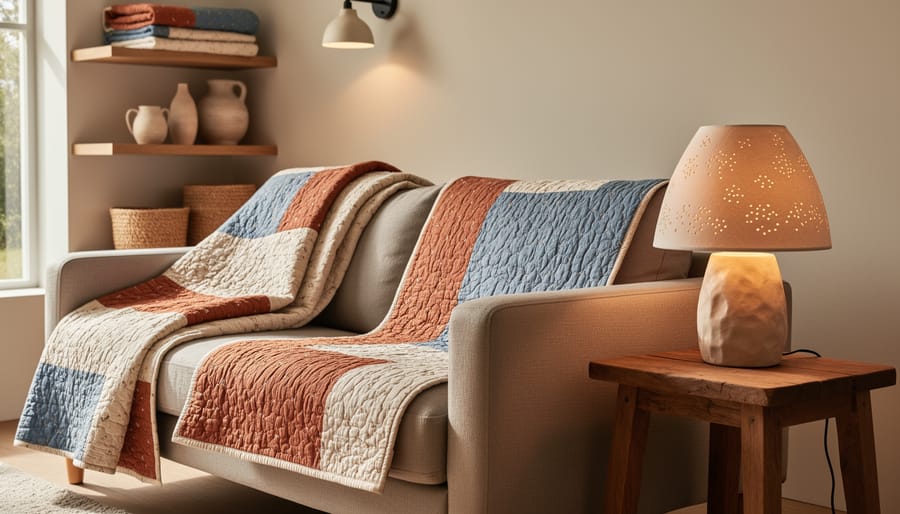
Statement Pieces vs. Everyday Items
Investing in one or two substantial handcrafted pieces, a live-edge dining table, a hand-thrown ceramic vase collection, or a woven wall hanging, creates instant visual impact and anchors your decor scheme. These statement items establish your home’s character and typically appreciate in both sentimental and actual value over time. Balance these investments with smaller handcrafted accessories like artisan candle holders, hand-dipped pottery bowls, or textile coasters that add layers of texture without demanding significant wall or floor space.
The key is intentionality rather than accumulation. Choose one focal piece per room and build around it with 3-5 smaller artisan items that echo its materials, colors, or craftsmanship style. A handmade wooden bench in your entryway pairs beautifully with smaller turned wood bowls or carved hooks. This approach maintains visual breathing room while showcasing craftsmanship throughout your space.
Consider how handcrafted items can support biophilic design principles by selecting natural materials like raw ceramics, untreated wood, or plant-dyed textiles. Start with versatile everyday pieces, hand-thrown mugs you’ll use daily, woven placemats, artisan soap dishes, that deliver regular enjoyment while you save for larger investments. This gradual layering creates an authentic, collected-over-time aesthetic rather than a showroom feel.
Finding Quality Handcrafted Decor in Canada
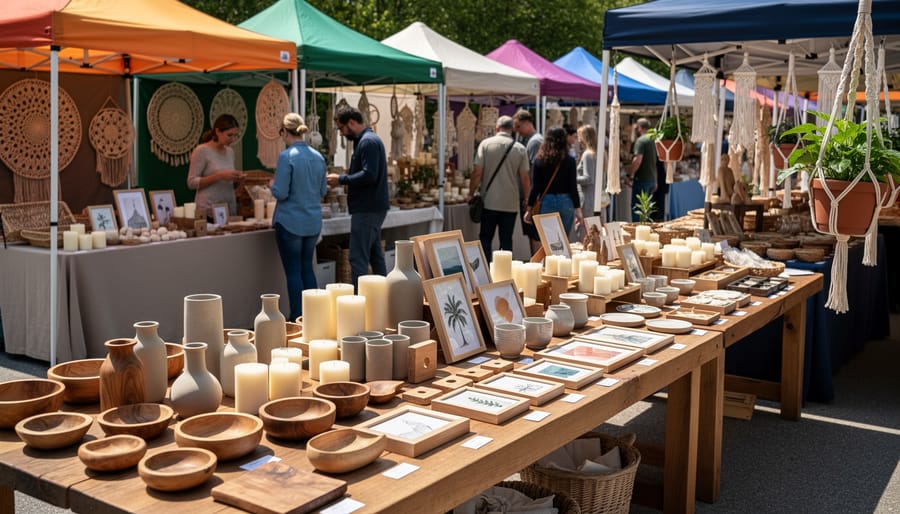
Finding authentic handcrafted decor in Canada requires knowing where makers actually sell their work. The good news is that artisan pieces are more accessible than ever, whether you prefer browsing in person or shopping from your couch.
Craft shows and markets remain the gold standard for discovering quality handcrafted pieces. You’ll meet makers face-to-face, see their work up close, and often hear the stories behind each creation. In Calgary, the Festival of Crafts at Stampede Park BMO Centre (20 Round Up Way SE, Hall F) runs October 29 to November 1, 2026, featuring over 140 Canadian artists and artisans. It’s particularly strong for finding holiday decor and gifts. Toronto hosts the Arts and Crafts Show on July 24, 2026 at 100 Queen St W, ideal for summer shopping before the fall rush. Local farmers markets also increasingly include artisan vendors alongside produce, check your city’s market schedule for dedicated craft days.
Artist studios and co-ops offer a quieter, more curated experience. Many cities have studio districts where multiple makers share space, often hosting monthly open houses or by-appointment visits. Studio tours let you see works in progress and sometimes commission custom pieces. Artist co-ops and galleries provide year-round access to vetted makers without the crowds of larger shows.
| Venue Type | Best For | Typical Price Expectations | Key Advantage |
|---|---|---|---|
| Craft Shows & Markets | Variety, seasonal items, smaller accent pieces | Wide range, budget to investment | Meet makers, compare multiple artisans at once |
| Artist Studios | Statement pieces, custom commissions | Mid to high investment | See process, request modifications |
| Online Platforms | Specific styles, hard-to-find makers | All price points | Shop from home, broader geographic access |
| Galleries & Co-ops | Curated collections, higher-end pieces | Premium pricing | Quality vetted, returns typically available |
Online artisan marketplaces have matured significantly. Look for platforms that verify their sellers and showcase maker profiles, authentic sites feature photos of artists at work, detailed material lists, and production timelines. The advantage is accessing makers from across Canada without travel, though you sacrifice the tactile experience of handling pieces before purchase.
Direct-from-maker purchasing through personal websites or social media offers the most direct connection. Many artisans share their process on Instagram, take custom requests via email, and offer studio pickup or shipping. You’ll typically get better pricing than through galleries since there’s no middleman markup.
To verify authenticity, ask about the maker’s process and materials. Genuine artisans can tell you exactly how they create their work and why they chose specific materials. Check for maker’s marks, signatures, or stamps on the piece itself. Be wary of vendors with overly broad product ranges, one person can’t realistically handcraft pottery, metalwork, textiles, and woodwork all at once. Search the maker’s name online; established artisans typically have a visible presence through past shows, features, or their own website documenting their work over time.
What to Look for When Choosing Handcrafted Pieces
Choosing a handcrafted piece means investing in something meant to last, so knowing how to evaluate quality before you buy saves both money and disappointment. Start by examining the finish, run your fingers along edges, joints, and surfaces. Smooth, even finishes with no rough patches or glue residue indicate careful workmanship. Look closely at how pieces are assembled: dovetail joints in wooden items, clean seams in ceramics, and secure stitching in textiles all signal proper technique rather than shortcuts.
Material quality matters as much as construction. Solid wood feels substantial and shows natural grain variations, while veneered particleboard feels lighter and shows repetitive patterns. Hand-thrown pottery has slight weight differences and unique glaze variations that machine-made ceramics lack. Woven textiles should have consistent tension without loose threads, and natural fibres like cotton, linen, or wool age better than synthetic blends.
Don’t evaluate aesthetics in isolation from function. A beautiful ceramic bowl with an awkward weight distribution won’t get used. A stunning woven basket that sheds fibres constantly becomes a frustration. Pick up the piece, handle it, imagine using it daily. Does it feel balanced and well-proportioned? Can you actually clean it without damage?
Ask makers direct questions about their process: “How did you create this finish?” or “What inspired this design?” Genuine artisans speak enthusiastically and specifically about techniques, materials, and inspiration. Vague answers or reluctance to discuss methods raises concerns. Request information about care requirements too, a maker who knows their craft will have clear guidance.
Watch for red flags that suggest mass production dressed up as handmade. Identical “handcrafted” items with no variations, prices far below comparable artisan work, or pieces lacking a maker’s mark or signature all warrant skepticism. If the seller can’t name the specific artist or explain the creation process, you’re likely looking at factory goods marketed with artisan language.
Making Handcrafted Decor Work Within Your Budget
You don’t need a five-figure budget to bring artisan character into your home. With the Canadian home decor market reaching $16.3 billion in 2025 and projected to grow at 3.78% annually through 2034, there’s clear momentum behind thoughtful, quality purchases over impulse buying. The key is strategic choices that maximize impact without stretching your finances.
Start with accent pieces that pack visual punch relative to their price. A handcrafted ceramic vase, woven wall hanging, or artisan candle holder typically costs far less than furniture but immediately signals intentionality in your space. These smaller items also let you experiment with different makers and styles before committing to larger investments.
Focus on versatile pieces that work across seasons and rooms. A handwoven throw blanket transitions from sofa to bedroom to outdoor seating. Hand-thrown serving bowls function as tableware and decorative accents. This dual-purpose approach means each purchase earns its keep year-round rather than sitting idle.
Choose timeless over trendy. While that macramé plant hanger in the latest color might catch your eye, a classic earthenware bowl or simple wooden tray will still feel relevant in five years. Artisan work often carries inherent timelessness because it’s rooted in traditional techniques rather than fast-moving design trends.
Shop strategically around craft show seasons. Many artisans offer special pricing at events like the Festival of Crafts in Calgary or reduce prices on older inventory to make room for new work. Fall and early winter shows often feature the year’s best selection as makers prepare for gift-giving season.
Balance your approach by pairing one or two handcrafted showpieces with complementary mass-market basics. Let an artisan dining table anchor a room with standard chairs, or display handmade pottery against affordable shelving. This layering creates a collected-over-time aesthetic while keeping costs reasonable. The same principle applies to eco-friendly decor choices, where strategic investments in quality pieces matter more than replacing everything at once.
Caring for Your Handcrafted Investment
Handcrafted pieces deserve thoughtful care to preserve their beauty and function for years to come. Unlike mass-produced items with standardized materials, artisan work often involves unique finishes, natural materials, and techniques that require specific handling.
For ceramics and pottery, hand wash with mild soap and warm water rather than using the dishwasher, which can crack glazes or cause thermal shock. Avoid sudden temperature changes and never place cold ceramics in hot ovens. Store plates and bowls with soft padding between them to prevent chips.
Woven textiles and quilts need gentle care to maintain their structure. Vacuum on low settings or shake outdoors to remove dust. Many handwoven pieces should be dry cleaned or hand washed in cool water, never wrung or twisted. Let them air dry flat to prevent stretching. Rotate displayed textiles away from direct sunlight, which fades natural dyes.
Wood items benefit from regular dusting with a soft cloth and occasional conditioning with food-safe mineral oil or beeswax, depending on the finish. Keep wooden pieces away from heat vents and humid areas to prevent warping or cracking. Wipe spills immediately and never soak wood in water.
Metal decor varies widely, so ask the maker about their specific finish. Some metals need polishing, while others develop a desirable patina over time. Use coasters under metal items on wooden surfaces to prevent moisture damage to both materials.
Hand-blown glass can have delicate areas where the artist worked the material. Dust with microfiber cloths and wash by hand with gentle soap. Support the piece from its sturdiest point when lifting.
Always follow the maker’s care instructions. They understand exactly how their materials and techniques respond to cleaning and handling, and their guidance protects your investment far better than generic advice.
Common Questions About Handcrafted Home Decor
Handcrafted pieces typically cost 30-50% more than comparable mass-produced items, but that premium reflects actual hands-on work, better materials, and one-of-a-kind character. A hand-thrown ceramic vase might run $85 versus $40 for a factory version, but you’re paying for distinct artistry and durability that often outlasts cheaper alternatives. The price difference narrows when you compare handcrafted pieces to high-end mass-market brands, where you’d pay similar amounts for less individuality.
Most artisans welcome custom modifications. You can usually request different dimensions, color variations, or finishes on standard designs without a significant upcharge. Completely custom commissions, where the maker creates something entirely new to your specifications, take more time and cost more, but they give you exactly what you want. Always discuss your vision before the maker starts work to confirm feasibility and avoid misunderstandings.
How can I tell if something is genuinely handmade?
Look for slight variations in size, color, or finish, machine-made items are perfectly uniform. Check for tool marks, visible joinery, or hand-painted details. Legitimate makers will readily explain their process and show works-in-progress if you ask.
What’s a realistic timeline for commissioned work?
Simple pieces like pottery or small textiles usually take 4-8 weeks, while furniture or complex metalwork can require 12-16 weeks. Popular makers often have waitlists, so plan ahead for special occasions or home projects.
Are handcrafted items durable enough for daily use?
Absolutely. Artisans build for longevity, using solid wood instead of particle board, quality glazes that won’t chip easily, and reinforced stitching on textiles. Many handcrafted pieces outlast mass-produced equivalents by years or even decades with proper care.
How do I blend handcrafted pieces with my current decor?
Start with one statement piece in a neutral material like wood or linen that complements your existing palette. Use handcrafted items as focal points and surround them with simpler mass-market basics. The contrast actually highlights the artisan work without requiring a complete room overhaul.
Durability concerns usually come from comparing handcrafted items to cheap disposable decor, not to quality mass-market pieces. A hand-woven throw costs more than a synthetic blanket from a big-box store, but it’s built to handle regular washing and years of use. Ask the maker about intended use, most design for real life, not just display.
Mixing handcrafted pieces with existing decor works best when you treat artisan items as anchors rather than trying to match everything perfectly. A handmade ceramic lamp doesn’t need to coordinate with every pillow; it adds visual interest precisely because it stands out. Choose pieces in materials or colors that echo something already in the room, then let their uniqueness shine. You’ll create a collected-over-time look that feels personal rather than catalog-ordered.
Choosing handcrafted home decor means investing in pieces that tell a story, yours and the maker’s. Every artisan item brings something mass production never can: the subtle imperfections that prove human hands shaped it, the knowledge that your purchase supports a skilled craftsperson, and the assurance that no one else owns exactly what sits on your shelf or hangs on your wall.
You don’t need to overhaul your entire home overnight. Start with one piece that speaks to you, whether that’s a hand-thrown vase for your entryway or a woven wall hanging above your sofa. Let it anchor a room, then build around it as your budget allows.
The handcrafted movement in Canada isn’t slowing down. With the home decor market projected to grow from $16.3 billion in 2025 to nearly $22.8 billion by 2034, more homeowners are recognizing what artisan pieces offer: quality that lasts, character that evolves with your space, and the satisfaction of owning something made with intention rather than churned out by the thousands.
These aren’t just decorations. They’re investments in the spaces where you live, the artists who create, and the lasting value of choosing substance over convenience.