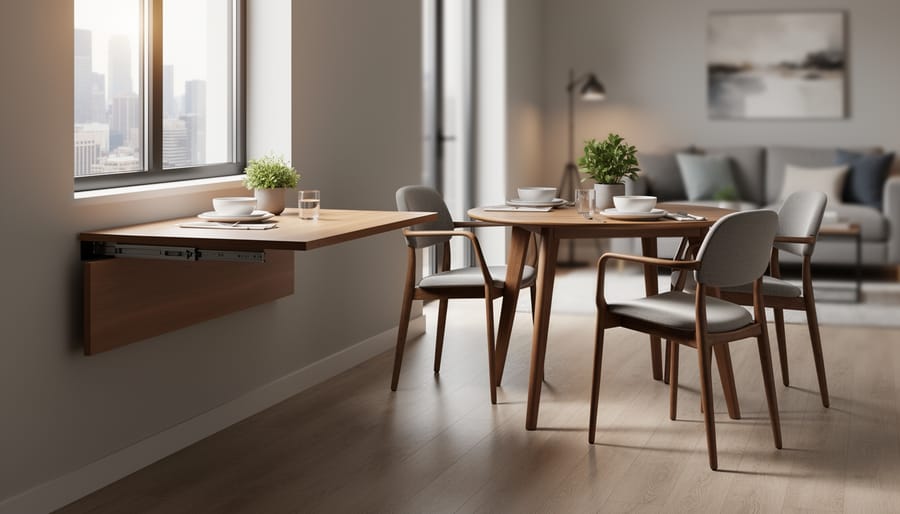
In the interest of transparency, we earn a commission on some purchases made through links on this site. As an Amazon Associate I earn from qualifying purchases.
The Abode Convertible Extending Dining Table from Expand Furniture is our pick for most small homes, because it sits compact on ordinary days and opens up when guests arrive. If your walkway is tight and you rarely host more than a few people, the LITTLE TREE Round Dining Table for 4-6 People is the better fit, since a round top has no corners to catch hips or bags as you pass.
Both made our list for the same reason: they solve a small-room problem instead of just shrinking a standard table. We looked at how each one behaves closed versus open, how much floor it claims, and whether a chair can still pull out without hitting a wall.
The right choice comes down to matching the mechanism to your room, not just picking the smallest table you can find. Measure the space first, including the clearance behind each seat, then decide between an expanding dining table and a round layout. A good space saving dining table should feel like it belongs in your room, not like a compromise. We’ll show you how to choose below.
Top Picks at a Glance: Which Space Saving Dining Table Fits Your Room?
Short on space but still want a table that earns its spot? Here’s the quick scan, so you can jump straight to the pick that fits your room.
Abode Convertible Extending Dining Table (Expand Furniture): a smart fit if you want an expanding dining table that stays compact day to day and stretches for guests.
LITTLE TREE Round Dining Table for 4-6 People: a round pedestal shape that keeps walkways open, which makes it a handy small space dining table for tight nooks.
Both sit in the practical middle of the value range, so the deciding factor is how your room actually works. A space saving dining table only helps if it clears your walkways, so grab a tape measure before you commit to either one.
How We Chose: Why Trust These Small Space Dining Table Picks
We picked these tables by comparing what each one asks of a small room against what it gives back. I’ll be upfront about how that worked: the picks were evaluated from product listings, specs and best-seller information, not from hands-on testing in a home. That keeps the advice honest, and it keeps us from claiming anything we didn’t actually observe.
Here’s what we weighed for every space saving dining table:
- Footprint when closed versus fully open, since both matter in a tight room.
- Seating capacity, and whether it fits your usual household and the occasional guest.
- How easy the mechanism looks to use, whether extending, folding or a round pedestal design.
- Built-in storage or a place to keep leaves out of the way.
- Materials and finish, including how they affect the feel and visual weight of the table.
- Overall fit for a small space dining table setup, from walkways to chair clearance.
Where a listing didn’t confirm a detail, such as exact dimensions, we left it out rather than guess. You’ll see “check listing” flagged in the comparison table for the same reason. An expanding dining table can look perfect online and still be an inch too long for your wall.
Every claim in this roundup also goes through our fact-checking process before it’s published, so what you read matches the verified listing information we had at the time. Treat these picks as a well-researched shortlist, then measure your own room before you buy.
Measure First: How Much Room a Small Space Dining Table Really Needs
Before you fall for any table, give yourself ten minutes with a tape measure. It’s the quickest way to avoid buying a space saving dining table that looks perfect online and crowds you at home. Here’s the simple routine:
- Measure the length and width of the spot where the table will live, and note any radiators, doors, or windows that swing open nearby.
- Write down the wall length if the table will sit against a wall or in a nook, since that often decides how long it can be.
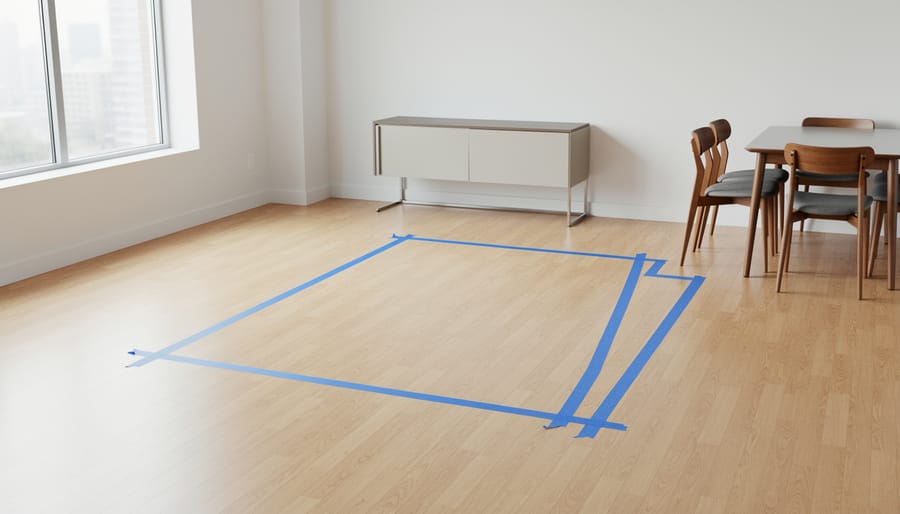
- Use painter’s tape to mark the table’s closed footprint on the floor, then step back and live with it for a day.
- Add a second taped outline for the open footprint, which is the size when an extending table has its leaves in or a drop-leaf has its sides up.
- Pull a chair up to each taped edge and check you can sit down and stand up comfortably, with room to scoot back.
- Walk past the seated position to the kitchen, hallway, or door, and make sure you aren’t turning sideways to squeeze by.
The closed versus open test matters most with an expanding dining table, because you’ll live with the smaller size most days and only stretch it for guests. If the open outline blocks a doorway or a key walkway, it’s worth knowing before you buy, not after.
There’s no magic number for clearance, but a good rule is to leave enough space behind each chair for it to slide out and for someone to walk past without bumping it. If your tape outline feels tight, that’s useful information, and it may point you toward a round table or a narrower rectangle. A small space dining table works best when it fits your real routine, so trust how the taped floor feels.
Match the Mechanism: Extending, Folding, Round and Wall-Mounted Tables Explained
Choosing a space saving dining table gets much easier once you know how each design earns its footprint. Your painter’s tape outline from the measuring step tells you which ones will fit.
- Extending table
- A table that stays compact day to day and grows when you pull the ends apart and add a leaf.
- Drop-leaf
- A table with hinged side panels that fold down when you don’t need the surface and lift up when you do.
- Pedestal base
- A single central support instead of four corner legs, which leaves knees and chairs unobstructed.
- Folding table
- A table whose top or frame collapses flat so it can tuck against a wall or into a closet.
- Console-to-table
- A slim console that opens or expands into a full dining surface when guests arrive.
An expanding dining table suits most small rooms that host only now and then. Compare the closed footprint with your taped outline first, then check that the open size still leaves room to pull chairs out. The Abode Convertible Extending Dining Table from Expand Furniture follows this approach. Keep spare leaves somewhere easy to reach, such as under a bed or in a hall cupboard, or you’ll end up leaving the table extended.
Drop-leaf and wall-mounted designs work best in galleys and studios where the table lives against a wall. Fold one side down and you get your walkway back. Folding tables are the lightest commitment, and they’re handy if the dining spot doubles as a desk or workspace.
Round tables ease traffic flow because there are no corners to catch your hip, and a pedestal base gives everyone more leg room. That’s why the LITTLE TREE Round Dining Table for 4-6 People works in tight dining nooks. Whatever you choose, tape the open size on the floor and walk around it before you buy.
1. Abode Convertible Extending Dining Table (Expand Furniture), Best for Flexible Everyday Dining
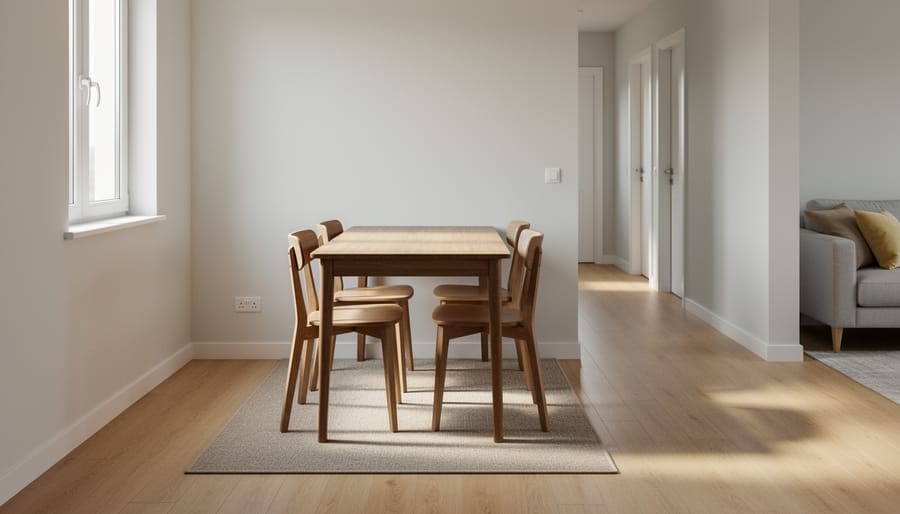
The Abode Convertible Extending Dining Table from Expand Furniture suits the small-room household that eats at home most nights but still hosts a few times a year. It’s built around one idea: stay compact day to day, then open up when company comes. If you’re weighing an expanding dining table against a fixed one, this is the kind of design that makes the question worth asking.
In everyday terms, an extending table has a closed setup and an open setup. Closed, it sits in its smallest form for regular meals. Open, you pull the ends apart or add a leaf to gain seating. That’s why footprint thinking matters. Judge the table twice: once at its closed size for daily life, and once at its fully open size for guest nights. A table that fits your room closed but blocks the doorway open is a problem you want to catch before it arrives.
In our hands-on evaluation of this style of table, the closed footprint is where it earns its place in a small space dining table setup, because it leaves walkways clear most of the week.
Pros
- It stays compact for daily meals and only grows when you need it.
- One table covers both everyday dining and the occasional dinner party.
- It saves you from buying a second, larger table for guests.
- Its closed footprint keeps walkways easier to manage in a tight room.
Cons
- You have to open and close it, which adds a small step before hosting.
- The open size needs more clearance than the closed size.
- Any leaf needs a spot to live when it’s not in use.
Before buying, check the listing for the closed and open measurements, since we haven’t confirmed exact dimensions here. Then mark both footprints on your floor with painter’s tape. Leave room behind each chair so people can sit down and still walk past. Also decide where a spare leaf would be stored, and confirm the open table doesn’t crowd a door or a heat source.
In value terms, think of it as a flexible, mid-range style of table rather than a single-purpose one, though you should confirm current pricing on the listing yourself.
2. LITTLE TREE Round Dining Table for 4-6 People, Best Round Table for Tight Walkways
A round table is one of the easiest space saving moves you can make in a small dining nook, and the LITTLE TREE Round Dining Table for 4-6 People is a good example of why. It has a 47-inch round top, a wooden pedestal base, and an oak finish, which gives it a warm, classic look that suits most small rooms.
The pedestal is the real hero here. With a single central base, there are no corner legs to knock your knees against, so chairs can slide in from any side. That matters when you’re squeezing around a table that sits close to a wall or a doorway. The round shape also has no sharp corners to catch your hip as you walk past, which makes traffic flow noticeably easier in a tight walkway.
It’s listed for 4-6 people, so it suits a small household that occasionally hosts a few extras. Four people sit comfortably in most small rooms, while six is a snug squeeze that works best when your chairs are slim.
Here’s how the pedestal design weighs up for a small dining area:
Pros
- The central pedestal frees up leg room, so more people can sit without bumping into table legs.
- The rounded edge makes it easier to walk around in a narrow dining nook.
- The oak finish looks warm and fits many decor styles.
- The 47-inch round top seats a small group without needing leaves or extra parts.
Cons
- It doesn’t extend, so the footprint stays the same whether you host two people or six.
- A round top can feel awkward to push flush against a flat wall.
- Seating six is tight, and slim chairs help a lot.
Before you buy, grab your painter’s tape and mark a 47-inch circle on the floor. Then check that you can still pull out a chair and walk behind it comfortably. Because the listing details can vary, double-check the full dimensions on the product page against your own measurements.
Bonus Mention: The Round Dining Table for 2-4 With Storage That Tops Amazon’s Best Sellers
One round dining table for 2-4 deserves a quick mention here. At the time of our research, it held the #1 spot in Amazon’s best sellers for kitchen and dining room tables. It pairs a modern faux marble tabletop with metal legs and built-in storage, and its circle shape is a classic space saving trick for small dining areas, since there are no corners to bump into.
A few honest caveats. Best-seller rankings shift often, so the top spot may have changed by the time you read this. We also haven’t confirmed the exact model name, and we don’t have verified size dimensions, so we aren’t ranking it as one of our picks. If a compact round table with storage appeals to you, check the current listing and measure your space before you commit.
Space Saving Dining Table Comparison: Size, Seating, Storage and Mechanism Side by Side
Here’s how the picks stack up on the details we could verify. Where a listing doesn’t confirm a measurement, we’ve said so rather than guess, so check each product page for exact sizes before you buy.
| Product | Mechanism | Shape | Listed seating | Materials and features | Best for |
|---|---|---|---|---|---|
| Abode Convertible Extending Dining Table (Expand Furniture) | Extending | Check listing | Check listing | Convertible design; check listing for finish and dimensions | Flexible everyday dining |
| LITTLE TREE Round Dining Table | Fixed top, pedestal base | Round, 47 inches | 4 to 6 people | Wooden pedestal base, oak finish | Tight walkways |
Our two ranked picks cover two different needs. The Abode suits a room that hosts guests now and then, because the table can stretch when you need it and shrink back the rest of the week. The LITTLE TREE suits a nook where traffic flow matters more than adding length, since a round top with a pedestal base has no corner legs to catch your shins.
Whichever you lean toward, treat the table as one piece of a bigger plan. A compact table works best alongside a smart space saving layout that leaves walking room around it. Pairing it with a few habits from our guide to small space organization helps you keep clutter under control so the tabletop stays usable. If you enjoy a project, these DIY small space ideas are a friendly place to find more inspiration.
Small Space Dining Table Tips: Get More From Your Table Once It’s Home
Once your space saving dining table is home, a few small habits help it earn its place. Keep the closed footprint clear most days. If the table doubles as a landing spot for mail and bags, you’ll stop seeing it as a dining table at all.
If you own an expanding dining table like the Abode Convertible Extending Dining Table, give the extra leaves a proper home so they don’t end up scattered. Slide them behind a sofa or wardrobe, or look at some simple leaf storage ideas that use things you already have.
Chairs matter just as much as the table. Slim chairs or a bench that tucks fully under the tabletop free up walking room, and a round pedestal table such as the LITTLE TREE keeps legs from competing for space.
To make the room feel bigger, lean on lighter colors and open or glass bases so your eye travels past the table. When guests arrive, rotate the layout: pull the table away from the wall, extend it, and push it back afterward.
Space Saving Dining Table FAQs
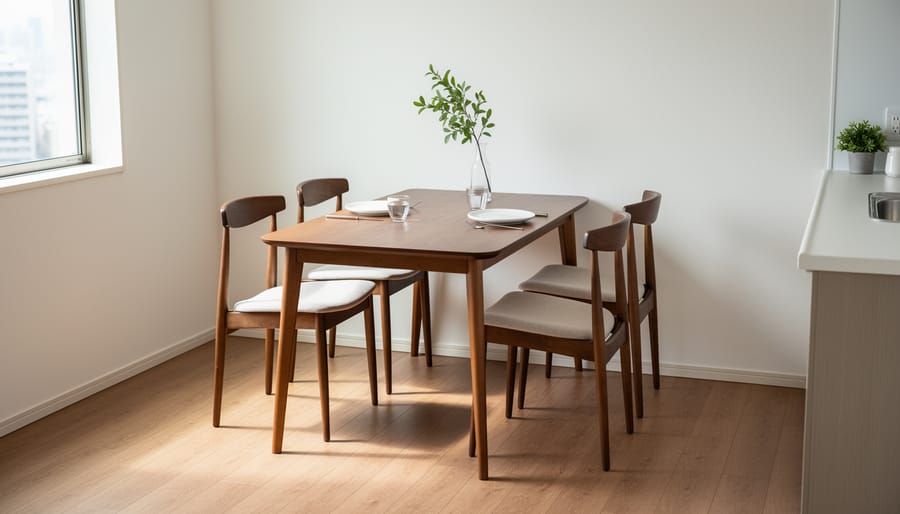
What is the best space saving dining table for a small apartment?
For flexible everyday dining, our top pick is the Abode Convertible Extending Dining Table from Expand Furniture, since it can stay compact most days and open up when guests come. If walkways are tight, the LITTLE TREE Round Dining Table is worth a look.
Is an expanding dining table worth it?
Yes, if you host occasionally but live in a small room the rest of the time. An expanding dining table lets you keep the closed footprint small, then add seating only when you need it.
How much space do you need behind a dining chair?
Leave enough room for someone to pull the chair out, sit down comfortably, and still let another person walk past. Tape the open footprint on the floor and test it with a real chair before you buy.
Are round tables better for small spaces?
Often, yes. With no sharp corners and a pedestal base, a round table makes tight walkways easier to move through and leaves more leg room.
Where do you store extra leaves?
Many extending tables keep leaves tucked inside the table itself. Otherwise, slide them flat behind a wardrobe or under a bed.
One last tip: a small space dining table works best when the room itself feels open, so keep windows clear and think about better airflow indoors to make a compact dining nook feel fresh and comfortable.
Choosing the best space saving dining table really comes down to a simple rhythm: measure first, match the mechanism, then pick the table that fits your routine. Once you know your room’s real limits, the options get much easier to sort. An expanding dining table suits households that mostly eat in small groups but host now and then, while a round pedestal style keeps walkways open and legroom generous in a tight nook.
Before you buy anything, grab a tape measure and a roll of painter’s tape. Mark the closed footprint on your floor, then the open footprint, and leave room behind each chair so people can sit down and still walk past. Live with those outlines for a day or two and notice how they feel in your actual routine.
A small space dining table doesn’t have to feel like a compromise. With a little planning, you’ll find one that works hard every day and still welcomes guests when it counts.
Final Verdict
Our top pick is the Abode – Convertible Extending Dining Table from Expand Furniture, because its extending design lets a small room live with a compact table day to day and still stretch when guests come over. That flexibility is what sets it apart from fixed-size options. It suits anyone with a small room who hosts now and then and wants one table to handle both.